
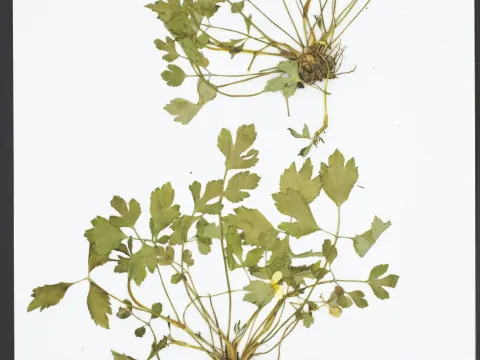
Carolina buttercup
Ranunculus carolinianus
Carolina buttercup (Ranunculus carolinianus) is a perennial herbaceous plant belonging to the Ranunculaceae family. Native to parts of the southeastern United States, it is recognized for its delicate foliage and characteristic yellow flowers that appear during the spring season.
What the section contains
Carolina buttercup
The plant thrives in moist, fertile soils that provide adequate drainage. It is commonly found in woodland edges and meadows, suggesting that it prefers partially shaded environments that protect it from the intense heat of direct midday sunlight during the summer months.
Regarding climatic requirements, R. carolinianus is well-adapted to temperate conditions. It requires consistent moisture throughout the growing season; however, standing water should be avoided to prevent root damage, which is a common issue for many Ranunculus species.
Agrotechnical maintenance involves regular monitoring of soil moisture and nutrient levels. Organic soil amendments are beneficial for improving soil structure, which in turn supports better root development and overall plant vitality throughout its lifecycle.
In terms of usage, the Carolina buttercup is primarily utilized in native landscaping and wildflower gardens. Its early flowering period makes it an essential early-season nectar source for native pollinators, including wild bees and various fly species.
The primary fungal threats to Ranunculus carolinianus include powdery mildew and leaf spot diseases. These conditions typically manifest during periods of high humidity and poor air circulation, necessitating strategic spacing of plants to improve ventilation.
Root and crown rot represent significant risks, particularly in heavy soils that retain too much water. Ensuring proper soil aeration and avoiding excessive irrigation are critical preventive measures to protect the plant's vascular integrity.
Pest issues often involve aphids and thrips, which target the tender new growth and developing flower buds. These insects not only damage plant tissue but can also serve as vectors for various plant viruses that significantly reduce overall plant health.
Small mammals and slugs may also pose a threat to young seedlings and emerging foliage in the spring. Implementing mechanical barriers or using non-toxic deterrents can help mitigate these losses during the most vulnerable growth stages.
Effective management of these threats requires an integrated approach. By combining clean cultural practices, such as removing debris and infected plant parts, with careful site selection, growers can successfully maintain healthy stands of Carolina buttercup.