
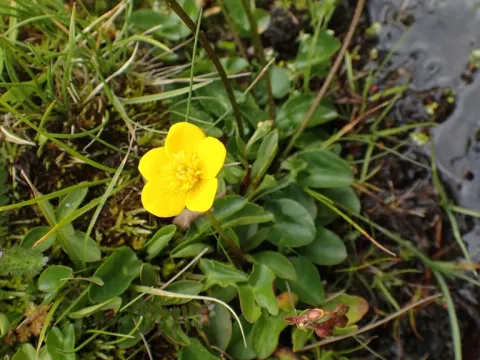
Caltha scaposa
Caltha scaposa
Caltha scaposa is a perennial plant belonging to the Ranunculaceae family. It is recognized for its unique adaptation to alpine and sub-alpine environments, where it typically develops in moist or waterlogged soils.
What the section contains
Caltha scaposa
The plant originates from mountainous regions where environmental conditions are characterized by high precipitation and cool, moderate temperatures. Its morphological structure allows it to thrive in nutrient-rich, damp substrates.
When cultivating this species, site selection is critical. It performs best in partial shade, as exposure to intense direct sunlight can cause rapid dehydration. Consistent moisture is a non-negotiable requirement for its health.
The soil should have a high organic matter content, such as peat-based or clay-loam mixes, which provide the necessary structure to retain moisture. Proper drainage is still required to prevent the accumulation of stagnant water around the roots.
In ornamental horticulture, Caltha scaposa is highly valued for water garden displays and bog planting. Its distinct appearance and ability to withstand low temperatures make it a resilient choice for specialized landscaping projects.
The primary threats to the plant include various fungal pathogens that thrive in overly wet and stagnant environments. Root rot and leaf spot diseases are common if the soil aeration is insufficient for the root system.
Gastropods, particularly slugs and snails, are significant pests that can quickly defoliate the plant. These pests are particularly active during humid conditions, which coincide with the plant's peak growing season.
Aphid infestations may occur, specifically targeting the flower stalks and the undersides of leaves. These insects cause stress to the plant and can be vectors for various viral diseases that negatively affect growth vigor.
Integrated pest management is the recommended approach for maintaining healthy stands. This includes hand-picking slugs, maintaining good sanitation by removing weeds, and ensuring proper spacing between plants to improve airflow.
Chemical intervention should be considered only as a last resort, using targeted biological controls to prevent long-term damage to the plant's fragile environment. Regular monitoring is essential to catch signs of distress early.