
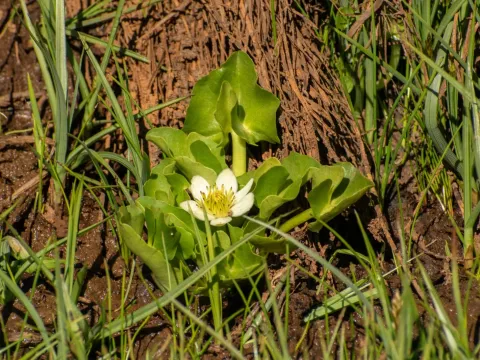
Caltha sagittata
Caltha sagittata
Caltha sagittata, commonly known as the arrow-leaved marsh marigold, is a perennial flowering plant belonging to the Ranunculaceae family. It is native to the southern regions of South America, typically found in wet, swampy environments.
What the section contains
Caltha sagittata
The propagation of this species can be done via seeds, which require a period of cold stratification to break dormancy. Sowing should be performed in autumn to allow seeds to endure natural seasonal changes.
When starting indoors, seeds should be placed in a damp, sterile medium. Maintain consistent moisture throughout the germination process, which may take several weeks depending on temperature stability.
Seedlings should be handled with care when transplanting to avoid root disturbance. They are slow to establish at first but grow vigorously once the root system has matured in its permanent location.
Vegetative division is the most reliable method for larger, established clumps. Splitting the rhizome in early spring allows the plant to settle before the peak of the growing season begins.
The primary requirement for Caltha sagittata is high soil moisture. As a wetland specialist, it performs best when planted in saturated soil, along the margins of streams, or within the shallow zones of a pond.
The plant thrives in nutrient-rich, organic-heavy soil. It prefers a slightly acidic to neutral pH level, which mimics its natural wetland habitat. Poor or sandy soils must be amended with compost or peat moss.
While the plant tolerates partial shade, it reaches its full flowering potential when exposed to direct sunlight. However, in hotter climates, afternoon shade may be necessary to prevent leaf scorching.
Temperature management is generally simple as the plant is adapted to cool, temperate zones. It is hardy, but in areas with extreme winter freezes, a protective layer of organic mulch can safeguard the rhizome.
Maintenance involves ensuring the plant never dries out. During dry spells, supplementary watering is essential. Fertilizer should be applied sparingly, ideally as a slow-release granular feed during the spring growth flush.
Caltha sagittata is generally robust, but its preference for wet environments makes it susceptible to fungal pathogens. Root rot is a risk if the water becomes stagnant and oxygen levels in the soil drop too low.
Leaf spots caused by moisture-loving fungi can appear during periods of high humidity. Improving air circulation around the plants is the most effective preventative measure against these infections.
Slugs and snails are the primary pests that damage the succulent foliage. These creatures favor the damp conditions that the plant requires, necessitating regular monitoring and potential physical barriers.
If chemical interventions are avoided due to the proximity to water, manual removal or the use of iron phosphate-based slug pellets is recommended to protect the integrity of the leaves.
Good garden hygiene, such as removing dead foliage at the end of the season, significantly reduces the overwintering capacity for pests and fungal spores, promoting a healthier start for the following spring.