
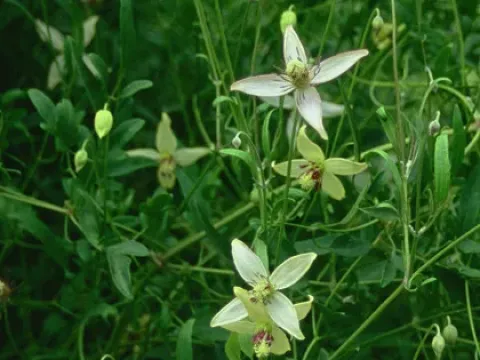
Clematis ispahanica
Clematis ispahanica
Clematis ispahanica is a perennial herbaceous plant belonging to the Ranunculaceae family. Native to the mountainous regions of Iran, this species is well-adapted to rocky, arid environments, making it a unique addition to specialized gardens.
What the section contains
Clematis ispahanica
Botanically, it presents as a subshrub or a sprawling vine with intricate pinnate foliage that maintains an attractive grey-green hue. Its growth habit is relatively compact compared to other clematis species, typically reaching heights between 50 and 100 centimeters.
The cultivation of this plant requires well-draining, lime-rich soil to mimic its native habitat. It is essential to ensure that the site receives full sun, as the plant is photophilous and requires significant light exposure to bloom effectively.
Agrotechnical practices focus on preventing root rot, which is the most significant challenge for this species. Watering should be deep but infrequent, ensuring the soil dries out between applications to maintain the health of the root system.
In ornamental landscaping, Clematis ispahanica is highly valued for its drought tolerance and delicate, star-shaped flowers. It serves as an excellent candidate for rock gardens, dry borders, and areas where low-maintenance aesthetic appeal is required.
Fungal diseases, particularly wilt, represent the primary threat to the stability of the plant. This condition is often exacerbated by high humidity or poor air circulation around the base of the plant, highlighting the need for careful spacing.
Pest issues include typical garden intruders such as aphids and spider mites. Managing these pests involves periodic inspection and the application of targeted insecticides, ensuring that the ecological balance of the garden is maintained.