
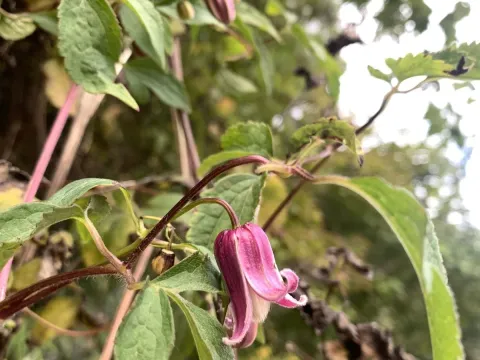
Clematis lasiandra
Clematis lasiandra
Clematis lasiandra is a perennial woody vine belonging to the Ranunculaceae family. It is native to the temperate forests of East Asia, including regions of China and Japan, where it typically climbs over shrubs and smaller trees to reach sunlight.
What the section contains
Clematis lasiandra
Botanically, it is characterized by compound leaves and an ability to use leaf petioles as tendrils to secure itself to vertical supports. The presence of dense, fine hairs on the stems and foliage gives the plant its distinct appearance and specific botanical name.
Regarding climate requirements, this species favors temperate conditions with moderate humidity levels. It thrives in locations where the roots are kept cool and shaded while the upper foliage is exposed to sufficient light for photosynthesis and blooming.
The soil should be well-drained, fertile, and slightly alkaline or neutral. Water management is critical for this species; it requires consistent moisture during the growing season but cannot tolerate waterlogged soils, which lead to rapid root decay.
In terms of хозяйственное usage, Clematis lasiandra is primarily used as an ornamental climber. Gardeners value it for its elegant texture and robust growth habit, making it an excellent candidate for covering pergolas, fences, and various garden structures.
The most significant pathological threat to this culture is wilt, caused by soil-borne fungi that attack the vascular system. Sanitation, such as removing infected debris and applying copper-based fungicides, is essential to maintain the health of the climbing plant.
Pest management focuses on controlling aphids and spider mites, which frequently thrive in dry, stagnant air. Keeping the plant properly hydrated and ensuring good air circulation around the stems are the primary methods for preventing significant pest infestations.