
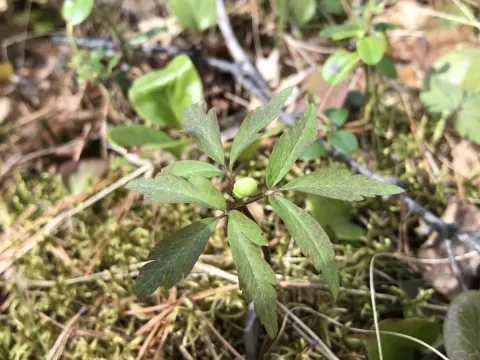
Anemone reflexa
Anemone reflexa
Anemone reflexa, known as the reflexed anemone, is a perennial herbaceous plant belonging to the Ranunculaceae family. It is native to the temperate forest regions of East Asia, thriving particularly in the moist, shaded environments of the Russian Far East, Japan, and China.
What the section contains
Anemone reflexa
This species is classified as a spring ephemeral, meaning it completes its life cycle in a short period before the forest canopy fully closes. It prefers humus-rich, well-drained soils that mimic the nutrient-dense forest floor litter found in its natural habitats.
Botanically, it is characterized by a creeping rhizome and solitary flowers where the tepals bend backwards, which is the defining feature of the species. The foliage is typically compound and basal, emerging early in the spring to take advantage of available sunlight.
Cultivation requirements focus on providing a cool, moist spring and a dormant period during the heat of summer. It is essential to ensure that the site is not prone to waterlogging, despite the need for high moisture levels during the active growing phase.
In terms of usage, it is primarily used in specialized shade gardens and botanical collections. It serves as a valuable model for studying the adaptive strategies of spring ephemerals, including their mechanisms for surviving extreme seasonal changes and dormant cycles.