
Anemone hybrida
Anemone japonica
Description
Growing requirements
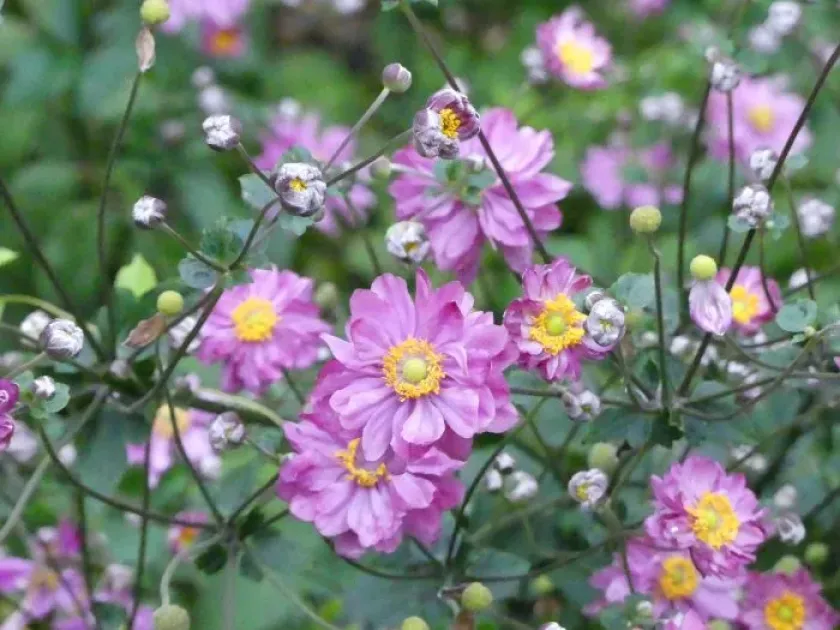
Anemone hybrida, commonly known as the hybrid anemone, is an herbaceous perennial belonging to the Ranunculaceae family. It is a garden hybrid derived from Anemone japonica and Anemone vitifolia, celebrated for its elegant late-season blooms.
The plant thrives in temperate climates and is best suited to locations that offer partial shade. It performs exceptionally well in woodland garden settings where it is protected from the intense heat and harsh rays of the afternoon sun.
Regarding soil requirements, it demands rich, moisture-retentive, and well-draining soil. An abundance of organic matter, such as compost or leaf mold, should be incorporated into the planting site to ensure optimal nutrient availability and structure.
Consistent moisture is vital for the health of Anemone hybrida, particularly during the active growing season. However, waterlogging must be strictly avoided, as the thick, fleshy roots are highly susceptible to rot if soil drainage is inadequate.
Cultivation practices involve applying a layer of organic mulch around the base of the plant every spring to retain soil moisture and suppress weeds. It is a long-lived plant that benefits from minimal disturbance once established in the landscape.
Main diseases and pests
The primary diseases affecting hybrid anemones include powdery mildew and various leaf spot fungi. These conditions are exacerbated by poor air circulation and high humidity levels around the foliage, requiring careful spatial management.
Pests such as aphids can occasionally congregate on new shoots, causing stunted growth and leaf curling. Furthermore, slugs and snails are significant threats, especially in the spring, as they consume fresh foliage and young stems.
Foliar nematodes are another concern for this species, leading to brown, unsightly lesions on leaves. Affected plants should be isolated or removed to prevent the spread of the pathogen through garden soil and irrigation water.
Effective management strategies include sanitation of the gardening area, proper spacing during planting, and regular monitoring for early signs of distress. If chemical intervention is necessary, fungicides or insecticides should be applied selectively.
In terms of agricultural and horticultural use, Anemone hybrida serves as a premier ornamental plant. Its primary value lies in its aesthetic contribution to public parks and private gardens, providing structural interest and colour when many other summer flowers have faded.