
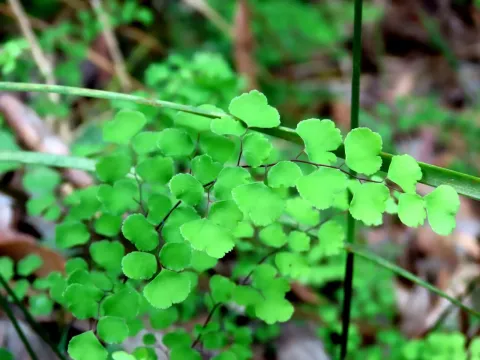
Adiantum aethiopicum
Adiantum aethiopicum
Adiantum aethiopicum, commonly known as the common maidenhair fern, is a perennial plant belonging to the Pteridaceae family. It is native to various regions, including Africa and Australia, where it naturally occurs in damp, shaded environments such as forest floors and rock crevices.
What the section contains
Adiantum aethiopicum
The plant is characterized by its delicate, creeping rhizomes and fine, light green fronds that are bipinnate to tripinnate in structure. Its graceful, airy appearance makes it a popular choice for indoor aesthetics and specialized horticultural displays.
Cultivation requires a high degree of ambient humidity, ideally maintained above 60 percent. In a greenhouse setting, misting systems or controlled environmental chambers are essential to prevent the delicate fronds from drying out and crisping.
Temperature management is critical for this species; it thrives in a range between 18 and 24 degrees Celsius. It is intolerant of frost and extreme heat, requiring consistent conditions to ensure optimal growth and foliage health.
The soil substrate must provide both high water retention and excellent drainage. A mix comprising peat moss, leaf mould, and horticultural grit or perlite is recommended to prevent root suffocation while maintaining the necessary hydration levels.
Scale insects and mealybugs represent the most significant pest threats to this fern. These pests often congregate on the undersides of the fronds, feeding on sap and leading to structural weakness and significant aesthetic degradation of the plant.
Fungal pathogens such as Botrytis (gray mold) can infect the plant under conditions of poor ventilation and excessive moisture. This disease typically manifests as fuzzy, gray necrotic spots on the stems, often necessitating the removal of affected fronds.
Root rot is a pervasive issue caused by overwatering or inadequate pot drainage. This condition prevents the roots from accessing oxygen, leading to the rapid decay of the entire root system and the subsequent collapse of the fern.
Prevention is centered on maintaining clean growing areas and ensuring proper air circulation between plants. Avoiding water contact with the foliage during evening hours can significantly reduce the risk of foliar fungal infections.
Chemical control must be approached with caution, as ferns are often sensitive to certain active ingredients in standard insecticides. Integrated Pest Management (IPM) practices, including biological controls and mechanical removal, are preferred for this delicate species.