
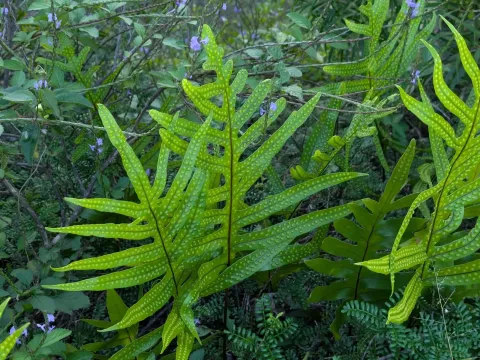
Phymatosorus grossus
Phymatosorus grossus
Phymatosorus grossus, commonly known as the musk fern or wart fern, is a robust species of the Polypodiaceae family. Originating from the tropical regions of the Pacific, including Polynesia and Australia, this plant is well-adapted to humid, shaded environments where it thrives on organic matter.
What the section contains
Phymatosorus grossus
The plant is distinguished by its creeping, scaly rhizomes that can spread across forest floors or attach to tree trunks. Its leaves, or fronds, are leathery and pinnate, providing a lush appearance that is highly sought after for horticultural and ornamental purposes.
For successful cultivation, the plant requires a well-aerated, moisture-retentive substrate rich in organic material. A mixture consisting of pine bark, peat, and charcoal is often ideal to mimic the natural epiphytic environment while ensuring sufficient drainage.
Environmental requirements include a stable, warm climate with temperatures typically ranging between 18°C and 26°C. High humidity levels are essential, as the plant lacks the thick cuticles found in desert flora and relies on ambient moisture to prevent desiccation.
Regarding light, the species performs best in bright, indirect sunlight. Direct exposure to intense rays can cause the fronds to bleach or develop necrotic patches, significantly reducing the decorative quality of the specimen.
- Scale insects (Coccidae) which colonize the undersides of the fronds.
- Mealybugs that hide in the junction between the rhizome and leaf stalks.
- Root rot caused by stagnant water or excessive soil density.
- Fungal pathogens favoring poor ventilation and high-humidity environments.
- Leaf spot diseases manifesting as darkened, irregular lesions on the foliage.
Management of these threats involves strict adherence to sanitation protocols. Removing infected fronds immediately prevents the spread of fungal spores, while using systemic insecticides at low concentrations helps control sap-sucking pests without damaging the sensitive fronds.
The economic utility of Phymatosorus grossus is primarily focused on the nursery trade. The production cycle revolves around vegetative propagation, where established rhizomes are segmented to generate new planting units for the decorative plant market.
In traditional practices, particularly in its native range, the leaves are harvested for their pleasant, musky fragrance. These fronds are utilized in cultural festivities, often being incorporated into traditional garlands or used to scent coconut-based oils.
Harvesting for propagation purposes should be done using sterile tools to minimize the risk of pathogen transmission. Each rhizome segment must have at least one or two healthy growing tips and enough root mass to sustain initial independent growth.
Maintenance of the plant during the growth phase includes periodic pruning of senescent fronds. This process ensures that energy is diverted towards new growth, keeping the plant compact and visually vibrant throughout its life cycle.
Following harvest or propagation, maintaining a post-division recovery phase is critical. Providing filtered light and controlled moisture levels allows the segments to establish a stable root system, ensuring high-quality plant stock for future distribution.