
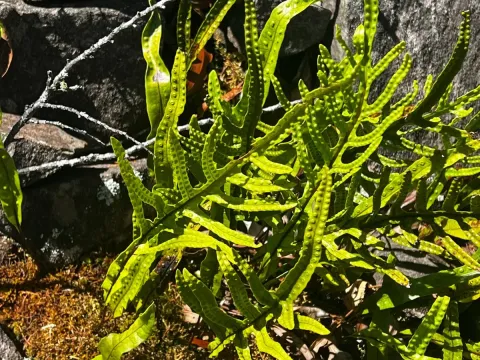
Phymatosorus diversifolius
Phymatosorus diversifolius
Phymatosorus diversifolius, commonly known as the kangaroo fern, is a species of the Polypodiaceae family. It is native to New Zealand and Australia, where it thrives in humid environments as an epiphyte or lithophyte, often found growing in shaded forested areas.
What the section contains
Phymatosorus diversifolius
The cultural requirements for this plant include high humidity levels, ideally maintained between 60% and 75%. Temperatures should be kept consistently moderate, avoiding exposure to extremes below +15°C or above +26°C to prevent tissue stress.
The substrate must be well-draining and aerated. A professional mix consisting of orchid bark, perlite, and high-quality peat moss is recommended to simulate the natural forest floor and tree bark conditions where these ferns naturally settle.
Light levels should be bright but indirect. Direct sunlight can scorch the fronds within hours, leading to permanent damage. Optimal placement is near a window with sheer curtains or in a position receiving filtered light throughout the day.
Watering should be frequent but mindful of drainage. The root system of Phymatosorus diversifolius is prone to rot if allowed to sit in stagnant water. Use tepid, chlorine-free water to maintain the health of the rhizomes.
Spider mites are the most persistent pest for this species, especially in indoor environments with low humidity. Detection can be made by observing fine webbing on the underside of the fronds or discolored, stippled leaves.
Fungal issues, such as root rot, frequently occur due to poor drainage or overly heavy potting mixes that hold excessive moisture. If the rhizomes become soft or discolored, the plant must be removed from its pot and treated immediately.
Scale insects can occasionally infest the thicker stems and rhizomes, creating hard, shell-like bumps. Physical removal combined with systemic horticultural oils is the most effective method for long-term control.
Environmental stress is often mistaken for disease. If the plant is placed in a drafty location, it may exhibit rapid browning of the leaf tips. Ensuring a stable climate is the most effective preventative measure against these physiological issues.
Regular sanitation of the growing environment is essential. Removing dead fronds and keeping the foliage clean from dust helps prevent spores of various pathogens from finding a host, keeping the plant vigorous and aesthetic.