
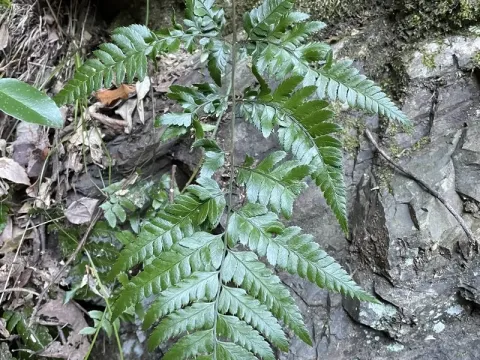
Arachniodes cornu-cervi
Arachniodes cornu-cervi
Propagation of Arachniodes cornu-cervi is most effectively achieved through vegetative division of the rhizome during the spring repotting cycle.
What the section contains
Arachniodes cornu-cervi
When dividing the plant, it is crucial to ensure that each section has enough healthy fronds and roots to establish itself independently in a new container.
Sporulation propagation is possible but requires sterile conditions, high humidity, and a steady temperature to ensure the successful development of prothalli.
The substrate for young plants must remain consistently moist but not waterlogged to prevent the delicate spores from rotting during the early growth stage.
Once the small sporophytes reach a suitable size, they should be transplanted into individual pots with well-drained, nutrient-rich soil mixtures.
This fern thrives in light, porous, and humus-rich soil, preferably with a slightly acidic pH to support its vigorous root system development.
It prefers indirect, filtered lighting conditions, as direct exposure to intense sun can lead to leaf scorching and loss of its distinct foliage patterns.
The ideal temperature range for this species is between 18 and 25 degrees Celsius, requiring protection from cold drafts and extreme heating sources.
High relative humidity is essential; therefore, regular misting or the use of an automatic humidifier is recommended for indoor cultivation environments.
Watering should be consistent using soft, dechlorinated water to avoid the accumulation of mineral salts that can negatively affect the frond health.
The primary pests targeting this species include spider mites and scale insects, which can cause significant damage if left untreated in dry air conditions.
Fungal issues, such as root rot, often stem from overwatering and poor drainage, leading to the rapid decay of the underground rhizomatous structures.
Leaf spot diseases can occur due to high humidity without proper air circulation, creating a breeding ground for pathogenic bacteria and fungi.
Regular monitoring of the foliage, especially the undersides of the fronds, is necessary to catch potential infestations at the earliest possible stage.
If chemical interventions are needed, always choose systemic or contact treatments specifically formulated for ferns to avoid phytotoxicity.