
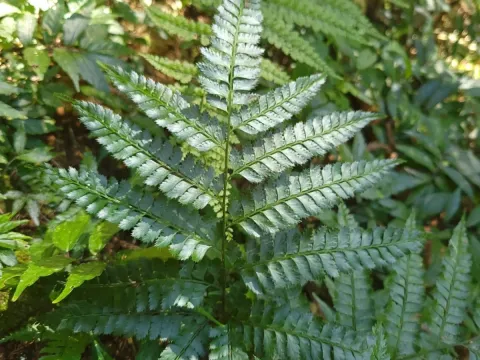
Arachniodes amabilis
Arachniodes amabilis
Arachniodes amabilis is a graceful evergreen fern belonging to the Dryopteridaceae family. It is highly esteemed in the horticultural industry for its lush, dark-green, leathery fronds which provide a sophisticated texture in various floral compositions and interior spaces.
What the section contains
Arachniodes amabilis
Native to the forest regions of East Asia, this plant thrives in humid and protected environments. Its evolutionary history in shaded woodland habitats makes it an ideal candidate for cultivation in greenhouses or as a robust indoor houseplant requiring minimal direct sunlight.
Cultivation requirements necessitate a well-draining, nutrient-rich, and slightly acidic substrate. A mixture of peat moss, perlite, and decomposed leaf mold is typically recommended to simulate the natural forest floor and ensure the root system has access to both moisture and oxygen.
The plant performs best under temperatures between 18°C and 22°C. While it is relatively adaptable, it is highly sensitive to drafts and sudden changes in humidity; therefore, maintaining an ambient humidity of 60% or higher is crucial for preventing frond tip browning.
Irrigation practices should be focused on maintaining consistent moisture without inducing waterlogging. During the growing season, a balanced liquid fertilizer applied sparingly every three weeks will support the development of vibrant new fronds and overall structural integrity.
Spider mites are the most prevalent pest affecting this fern, particularly in indoor environments with low humidity. These pests colonize the undersides of the fronds, causing visible stippling and eventual leaf drop if the infestation is not addressed immediately.
Scale insects can also pose a threat, attaching themselves to the stems and fronds to feed on plant sap. Regular inspection of the plant's architecture allows for early detection, which can be mitigated using horticultural oils or systemic insecticides if necessary.
Root rot caused by pathogenic fungi such as Phytophthora or Pythium often results from poor soil drainage and overwatering. Symptoms include a sudden decline in vigor, blackening of the base of the fronds, and a mushy, foul-smelling root system.
Leaf spot diseases may occur when there is poor ventilation and excessive moisture lingering on the foliage. To prevent these infections, it is advised to improve airflow and ensure that water is applied directly to the soil rather than over the entire plant.
Maintaining a clean and hygienic growing environment, along with careful watering and appropriate light management, significantly reduces the susceptibility of Arachniodes amabilis to pests and diseases, ensuring its long-term health and ornamental quality.