
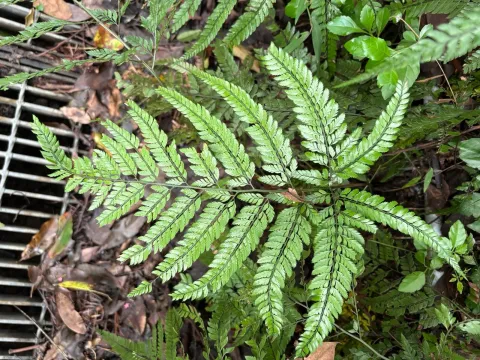
Arachniodes aristata
Arachniodes aristata
Arachniodes aristata belongs to the Dryopteridaceae family. This perennial, evergreen fern is native to East and Southeast Asia, where it thrives in shaded, moist forest environments.
What the section contains
Arachniodes aristata
The culture requires partial to full shade to maintain its lush foliage. Direct sunlight should be avoided as it causes leaf bleaching and tissue damage, making it ideal for indoor plant collections or shaded greenhouse sections.
The soil substrate must be rich in organic matter, slightly acidic, and well-draining. The root system is sensitive to waterlogging, so ensuring excellent drainage is critical for the long-term health of the plant.
Optimal growth occurs at temperatures between 18 °C and 24 °C. It is important to maintain consistent humidity levels around the foliage, especially in indoor environments where air conditioning may cause the leaves to dry out.
The primary use of Arachniodes aristata is in ornamental horticulture. It is highly prized for its glossy, dark green fronds, which provide excellent texture and aesthetic appeal in terrariums, container gardens, and interior landscape designs.
The culture is susceptible to various fungal diseases if hygiene standards in the greenhouse are not met. Root rot is the most common issue, often resulting from overwatering or poorly drained potting media.
Scale insects and mealybugs are the most common pests that affect this fern. These insects can hide in the dense foliage, and if left unchecked, they can significantly stunt the plant's growth and reduce its ornamental quality.
Spider mites are a major concern when the air is too dry. These microscopic pests feed on the underside of the fronds, leading to a dull appearance and, in severe cases, the eventual death of the affected leaves.
Effective management involves a combination of mechanical removal for minor infestations and the use of targeted systemic insecticides or horticultural oils when the population density reaches economic thresholds.
Prevention is the best strategy against threats. This includes maintaining proper air circulation, avoiding overhead irrigation that leaves water on the leaves, and isolating new plants before introducing them to the main collection.