
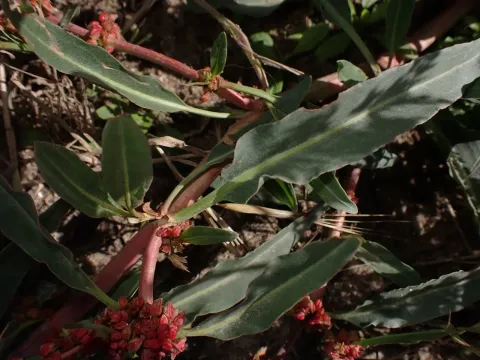
Willow-leaved dock
Rumex salicifolius
Willow-leaved dock, scientifically known as Rumex salicifolius, is a perennial herbaceous plant belonging to the Polygonaceae family.
What the section contains
Willow-leaved dock
Sowing is typically performed in early spring as soon as the soil reaches a temperature of 5–8 degrees Celsius to ensure rapid germination.
The seeds are sown in rows, with a spacing of about 20 to 30 centimeters, at a planting depth of approximately 1 to 2 centimeters to prevent desiccation.
For large-scale agricultural cultivation, it is important to prepare a fine tilth, as small seeds require good contact with moist soil to germinate successfully.
Fall planting is also a viable option in milder climates, allowing for early spring growth and faster initial harvesting of the green biomass.
This species thrives in well-drained, nutrient-rich soils with a moisture-retaining capacity, often favoring loamy or silty soil types.
Rumex salicifolius prefers sunny locations but shows significant adaptability to partial shade, making it a versatile crop for various landscape conditions.
The plant is highly resilient to cold temperatures, allowing it to overwinter successfully even in regions experiencing harsh frost conditions.
Consistent soil moisture is essential for producing high-quality leaves; therefore, irrigation systems are recommended in areas with irregular rainfall patterns.
Regular fertilization with nitrogen-based amendments during the growing season significantly enhances foliage production and overall plant health.
The harvestable yield of willow-leaved dock is determined by the frequency of leaf cutting and the general fertility of the growing medium.
Under optimal management, multiple cuts can be taken throughout the growing season, typically starting 50 to 60 days after the initial sowing.
Producers should monitor the development of flower stalks, as these shift the plant's energy away from leaf production and lead to coarser textures.
By preventing premature bolting, farmers can maintain a higher consistency in the quality of the harvested green leaves throughout the year.
With proper care, a plantation remains productive for approximately 4 to 5 years, after which replanting is usually necessary to maintain yields.
Leaf-feeding beetles are the primary pests that can cause significant damage to the plant's foliage, potentially reducing marketability significantly.
Aphids represent another common threat, as they colonize the underside of leaves and young stems, leading to stunted development and plant weakness.
Fungal pathogens such as rust or mildew may occur if planting density is too high, leading to poor air circulation and excessive humidity levels.
Management strategies focus on cultural practices such as crop rotation and spacing adjustments to minimize the impact of these common plant stressors.
Early detection through frequent field inspection allows for targeted interventions, reducing the need for broad-spectrum chemical applications.
Harvesting is performed by cutting the leaves at the base, approximately 3–5 centimeters above the soil surface, while avoiding damage to the crown.
Early morning harvests are preferred to ensure that the moisture content of the leaves is at its peak, providing better texture for the end consumer.
After each cutting cycle, providing water and light fertilization helps the plants recover quickly and promotes the regrowth of fresh, tender foliage.
Storage should prioritize cool temperatures and adequate ventilation to maintain freshness and prevent the yellowing of the harvested crop.
- Monitoring harvest timing carefully
- Trimming and cleaning the gathered leaves
- Cold storage to prolong shelf life