
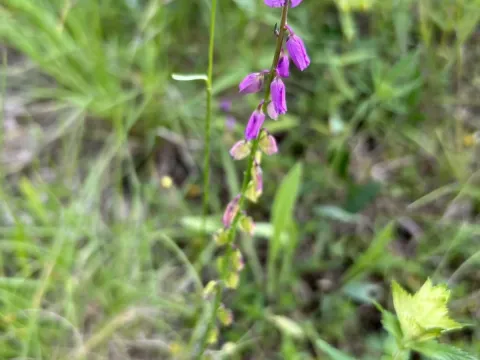
Piedmont milkwort
Polygala pedemontana
Piedmont milkwort (Polygala pedemontana) is a herbaceous perennial belonging to the Polygalaceae family. It is native to the regions of Southern Europe, where it thrives in calcareous soils and rocky habitats that provide excellent natural drainage.
What the section contains
Piedmont milkwort
The plant features a deep taproot and stems ranging from 10 to 30 centimeters in height. Its leaves are typically lanceolate with a glaucous appearance, which is an adaptation to help the plant manage water stress in its native, often dry, environments.
Cultivation requires soils with a slightly alkaline pH. The plant does not tolerate waterlogging, meaning that site selection must prioritize sandy or gravelly loams that ensure water moves quickly away from the root zone to prevent root rot.
As a sun-loving species, it requires full sun exposure to maintain its vigor and biochemical quality. Insufficient light levels lead to etiolation and a significant reduction in the concentration of secondary metabolites, which are essential for its commercial utility.
The climatic requirements include a stable temperate environment. While it is hardy in colder months, it is essential to ensure that the winter soil remains relatively dry to prevent the plant's crown from rotting during the dormancy period.
Fungal root pathogens are the primary threat to this crop. Excessive irrigation or heavy, poorly drained soil creates conditions that facilitate the growth of pathogens, leading to sudden wilting and the loss of the entire stand if not managed properly.
Powdery mildew represents a common challenge in dense plantings with poor airflow. This disease covers the foliage with white, dusty mycelium, which reduces the plant's ability to photosynthesize and renders the foliage unsuitable for harvest.
Soil-borne pests such as nematodes pose a risk to crop health by damaging the root system. Once a field is infested, the productivity of the crop declines significantly, necessitating long-term crop rotation cycles to restore the sanitary state of the soil.
Aphids can be a major issue during the flowering stage. These insects colonize the tender tips and flowers, sucking the sap and potentially causing stunted growth and deformity in the developing seeds or flowers.
Weed control is critical during the first season of growth because Piedmont milkwort develops slowly. Competitive weeds can easily overshadow the young plants, requiring meticulous manual or mechanical weeding until the crop is established enough to cover the space between rows.