
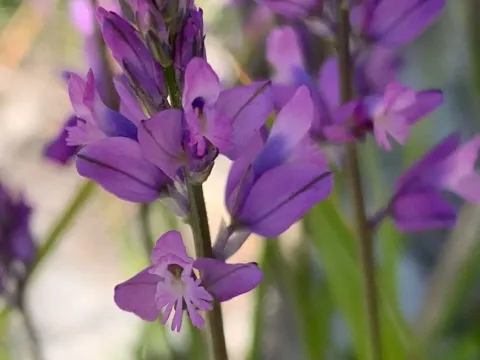
Nice milkwort
Polygala nicaeensis
Nice milkwort (Polygala nicaeensis) is a perennial herbaceous plant belonging to the Polygalaceae family. It originates from the Mediterranean basin and various parts of Europe, where it thrives in sunny, rocky habitats.
What the section contains
Nice milkwort
The plant is known for its distinctive morphology, featuring erect stems and racemes of blue or purple flowers. It typically develops a strong taproot, allowing it to survive in nutrient-poor and calcareous soils.
In terms of agricultural requirements, this species demands well-drained soils and a sunny exposure. It is highly sensitive to waterlogging, which often leads to root rot if the soil structure does not provide adequate aeration.
The climate suitable for its cultivation is characterized by moderate temperatures and sufficient solar radiation, which is essential for the maturation and development of its flowering shoots.
Economically, the plant is primarily researched for its potential pharmaceutical uses due to the presence of saponins, and it is also valued in apiculture for its nectar production during the summer months.
The most significant threats to Nice milkwort plantations are fungal diseases caused by excessive moisture, particularly root rot and various types of mildew that attack the foliage.
Pests that may impact the yield include sap-sucking insects like aphids, which can stunt plant growth and reduce the overall quality of the harvested material.
Weed competition is a major challenge during the establishment phase, as the plant grows relatively slowly and cannot compete with aggressive weeds in the field.
Good agricultural practices, such as maintaining optimal plant spacing and ensuring high-quality drainage, are the primary defenses against these biological threats.
Regular field scouting is essential to identify early pest outbreaks or fungal symptoms, allowing for timely intervention before the infection spreads across the entire crop area.