
Red-anther wallaby grass
Rytidosperma pallidum
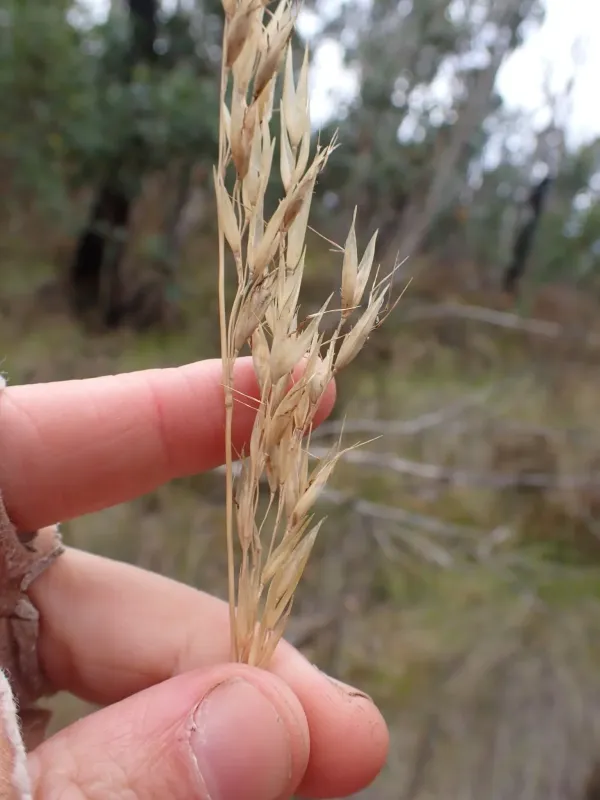
Description
Growing requirements
Red-anther wallaby grass (Rytidosperma pallidum) is a perennial grass species belonging to the Poaceae family. Native to Australia, this plant is well-regarded for its resilience and adaptability to various harsh environmental conditions.
Botanically, it forms dense tussocks, which are a characteristic growth pattern for many Australian native grasses. The foliage is typically narrow and pale, reflecting its adaptation to environments with high sunlight intensity and periodic water scarcity.
The species demonstrates significant tolerance to drought and nutrient-poor soils, making it an excellent candidate for landscape restoration and low-input pasture systems. It thrives in well-drained habitats and is highly resistant to extreme temperature fluctuations.
In terms of agricultural utility, it is primarily used for livestock grazing and soil stabilization. Its deep root system allows it to maintain productivity even when surface soil moisture is depleted, providing a reliable forage base.
Management requires attention to stocking rates to prevent overgrazing, which can degrade the plant base. Being a long-lived perennial, it provides permanent cover, contributing to the overall ecological balance of grazing lands.
Main diseases and pests
Disease pressure is generally low, but fungal pathogens can emerge during prolonged periods of high humidity. Rust infections on leaves can impair overall plant vigor and should be monitored during the active growing season.
Insect pests, such as grass grubs or aphids, can target the growing points or root structures. Infestations are more likely in weakened stands where plant vigor has been compromised by environmental stress.
Weed encroachment represents a significant threat during the seedling stage. Providing sufficient spacing and minimizing disturbance can help the crop establish a dominant presence in the pasture.
Viral infections transmitted by vector insects may cause stunting or discoloration. Integrated pest management strategies are recommended to keep insect populations below damaging thresholds.
Proper pasture rotation is essential to prevent the buildup of soil-borne pathogens. Maintaining a balanced nutrient profile helps the grass resist biological threats and ensures long-term sustainability.