
Saltgrass
Distichlis thalassica
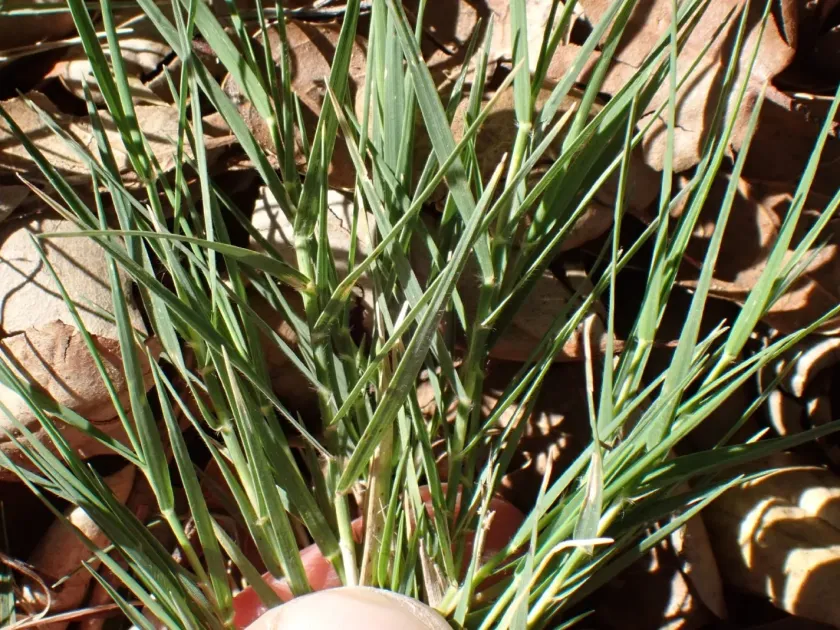
Description
Sowing dates
Sowing of saltgrass is typically carried out in the spring season when soil temperatures stabilize. An optimal sowing window aligns with the onset of the active growing season, allowing the plant to establish its root system efficiently before harsher conditions arrive.
The seeds of this culture possess a dormancy phase, necessitating stratification to improve germination rates. Due to the small size of the seeds, planting depth must be kept shallow to ensure high emergence rates, requiring careful seedbed preparation.
In large-scale agricultural projects, vegetative propagation using rhizome segments is more common. This method enables faster colonization of saline areas where seed-based establishment might be too slow to be practical.
During vegetative planting, segments are placed into furrows and compacted to ensure intimate contact with moist soil. Maintaining a specific spacing strategy is crucial to ensure even distribution and uniform coverage across the field.
Planting density is adjusted based on the intended use, whether for grazing pasture, soil stabilization, or phytoremediation. Establishing a dense turf as quickly as possible is generally prioritized to prevent weed competition.
Growing requirements
Saltgrass is a perennial grass of the Poaceae family, recognized for its extraordinary halophytic adaptations. It thrives in soils with high salinity levels that would be fatal to most conventional agricultural crops.
The primary environmental requirement for vigorous growth is sufficient soil moisture. Despite its inherent salt tolerance, the plant is vulnerable to prolonged drought conditions, especially during the critical early stages of development.
The culture thrives in well-illuminated environments. Exposure to high solar radiation stimulates photosynthetic activity, allowing the plant to manage nutrient cycling effectively even within highly saline environments.
Soil types can range from sandy textures to heavy clays. The critical factor for success is not soil fertility in the traditional sense, but the presence of salinity, which the plant manages via specialized salt-excreting glands.
Optimal growth temperatures generally fall within temperate ranges. While extreme winter temperatures can induce dormancy or necrosis of above-ground tissue, the rhizomes maintain viability to regrow in the following season.
Yield
While the productivity of saltgrass as a forage crop may not match high-intensity commercial grasses, it provides essential value in environments where standard crops fail. In arid salt-affected steppes, it provides a consistent biomass yield.
Total green matter output is dictated by the level of soil salinity and the availability of irrigation. Supplemental irrigation significantly boosts yield, making it an attractive option for marginal land utilization.
The nutritional quality of saltgrass hay is an important consideration. It possesses a distinct biochemical profile and is palatable to livestock if harvesting occurs at the correct physiological stage.
Yield potential is fully realized by the second or third year post-establishment. By this stage, a robust sod layer forms, capable of withstanding intensive grazing pressure without undergoing severe degradation.
Beyond traditional forage yield, saltgrass is valued for its phytoremediation potential, acting as a biological pump to accumulate salts from the soil, thereby preparing the site for better future land use.
Main diseases and pests
Saltgrass is characterized by high phytosanitary resistance. Its evolutionary adaptation to extreme environmental pressures naturally limits the impact of many common grain-related fungal pathogens.
Pests that typically afflict cereal crops rarely cause significant damage to this species. The high concentration of mineral salts within the leaf tissue creates a chemical barrier, making it unappealing to many herbivorous insects.
However, under conditions of excessive moisture and poor air circulation in overly dense stands, local outbreaks of root rot can occur. This is most common in low-lying areas where waterlogging is persistent.
Weed competition is only a significant threat during the first year of establishment. Once established, the aggressive growth of the rhizomatous root system allows the plant to outcompete most invasive vegetation.
Regular monitoring of canopy density is recommended. In cases of excessive matting or signs of turf senescence, management techniques such as controlled burning, periodic mowing, or grazing should be employed to rejuvenate the stand.
Harvesting
Mowing for hay should be timed during the heading phase, before the tissues undergo excessive lignification. Harvesting at this optimal stage ensures the highest possible protein content and overall forage value.
Standard harvesting equipment is suitable, provided the cutting height is calibrated to avoid damaging the crown and rhizomes. This practice ensures rapid regrowth for subsequent cuttings or grazing cycles.
Once harvested, the biomass requires a thorough drying process if intended for long-term hay storage. Due to the high mineral salt content, the curing process may take longer compared to traditional hay crops.
If utilizing the stand as pasture, implementing a rotational grazing system is vital. This prevents overgrazing and trampling, facilitating uniform recovery of the stand throughout the growing season.
Seed harvesting requires diligence, as maturity is often asynchronous. Collections should be timed to coincide with peak ripeness, often requiring specialized headers to reduce losses caused by natural shattering.