
Bristly wallaby grass
Rytidosperma setifolium
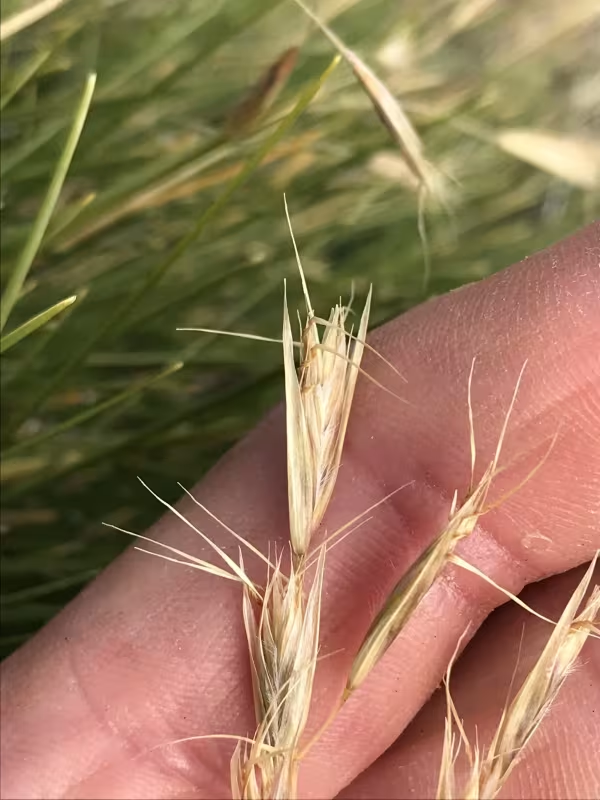
Description
Growing requirements
Rytidosperma setifolium, commonly known as Bristly wallaby grass, is a perennial grass species belonging to the Poaceae family. Native primarily to Australian environments, it has evolved to thrive in diverse and often harsh landscapes, making it a subject of agricultural interest.
The botanical structure of this grass features thin, rigid, bristle-like leaves. This morphological trait is an evolutionary adaptation that helps the plant minimize transpiration, allowing it to maintain growth in arid environments and under strong sun exposure.
Regarding soil requirements, this species is highly adaptable to nutrient-poor and acidic substrates. It is particularly noted for its ability to colonize degraded or marginal lands where standard forage crops fail to establish effectively due to nutrient deficiencies or low pH levels.
The climate requirements involve a preference for temperate to subtropical regions with good soil drainage. While the species is hardy and tolerant of light frosts, it requires adequate aeration in the root zone and is sensitive to waterlogged conditions that may lead to root rot.
Economically, Rytidosperma setifolium is utilized primarily in grazing systems. Its resilience to heavy grazing and trampling makes it an excellent candidate for improving the stability of natural pastures, providing a consistent source of forage in areas where more demanding species cannot survive.