
Rusty lovegrass
Eragrostis ferruginea
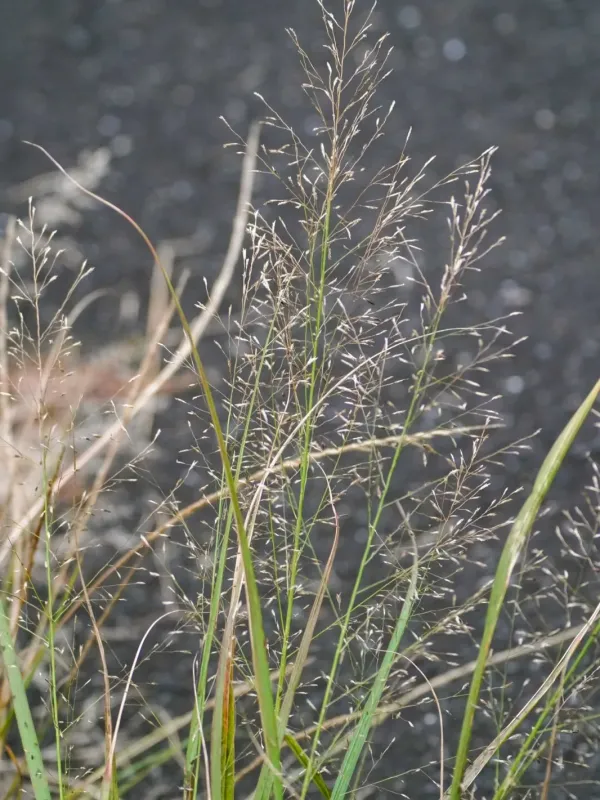
Description
Sowing dates
Rusty lovegrass is a perennial grass species that thrives when planted during the warmer months of spring. The ideal sowing window opens once the soil temperature is consistently high, usually from late April to May.
Because the seeds of Eragrostis ferruginea are extremely fine, they must be sown at a very shallow depth, ideally not exceeding 1 to 2 centimeters. Proper soil contact is vital for the germination of such delicate seeds.
For forage production, row planting with 15–20 cm spacing is recommended. This setup provides each plant with enough space to tiller effectively and establish a strong root system during its initial development phase.
It is crucial to keep the seedbed free of competing weeds during the first few weeks after emergence. Since the seedlings develop slowly, they are highly sensitive to competition for nutrients and sunlight.
Rolling the soil lightly after sowing helps ensure adequate moisture retention and physical contact with the seeds, which significantly increases the uniformity of the resulting grass stand.
Growing requirements
Originating from East Asia, this species is naturally adapted to a variety of light conditions. It performs well in full sun, which promotes dense growth, but it can also tolerate partial shade without significant loss in vitality.
The plant is not overly demanding regarding soil fertility, but it prefers well-drained loam or sandy soils. It is moderately tolerant of moisture but does not thrive in waterlogged conditions where root respiration is impeded.
Temperature plays a major role in the active growth of this grass. As a warm-season species, it requires temperatures consistently above 15 degrees Celsius to achieve its peak metabolic activity and biomass accumulation.
Nitrogen fertilization during the tillering phase is highly effective in increasing leaf production. Balanced fertilization schedules are key to maximizing the agricultural value of a rusty lovegrass stand.
While the species exhibits a degree of drought tolerance, consistent moisture during the peak summer months ensures better foliage density and prevents the stems from becoming overly lignified or coarse.
Yield
Rusty lovegrass produces a substantial amount of biomass, making it an excellent candidate for managed pasture systems. Yield depends significantly on the frequency of nutrient application and soil moisture levels.
With proper management, the crop can be harvested multiple times per season. Cutting during the vegetative stage before seed heads mature ensures high protein content and digestibility for livestock consumption.
As a pasture plant, it shows good regrowth potential after being grazed. It is robust enough to handle the moderate mechanical pressure of livestock, provided the stocking rate is well-regulated.
Seed yield is an important aspect for those specializing in nursery production. Careful monitoring is required as the seed heads are prone to natural shedding upon reaching maturity, necessitating timely collection.
Integrating improved, high-yielding varieties can enhance dry matter production by up to 20% compared to wild populations, offering better economic returns for farmers utilizing this species.
Main diseases and pests
Like many grasses, Eragrostis ferruginea is susceptible to rust fungi. These pathogens manifest as colored pustules on the leaves, which can reduce the photosynthetic capacity and overall health of the plant.
Powdery mildew is a common concern in regions with high humidity and poor air circulation. Ensuring proper spacing between rows is a simple yet effective preventative measure against this fungal development.
Root rot is typically associated with heavy or poorly drained soils. If water accumulates around the roots, the plant becomes vulnerable to decay, often requiring site remediation to restore productivity.
Aphids and grass-feeding insects may target the tender foliage during the summer months. Routine field scouting is recommended to determine if integrated pest management or biological controls are needed.
Soil-borne nematodes can hinder root development over time, especially in continuous cropping systems. Implementing a crop rotation plan is essential to mitigate the buildup of such soil pests.
Harvesting
The primary harvest method for hay is cutting at the early heading stage. Harvesting at this specific time provides the best trade-off between total biomass volume and the nutritional quality of the forage.
Post-harvest, the grass should be dried rapidly. The fine texture of rusty lovegrass leaves allows it to lose moisture relatively quickly, reducing the risk of fungal contamination during the curing process.
When harvesting for seeds, the stalks should be cut when the lower portion of the panicle starts to turn brown. This selective harvesting approach minimizes seed loss due to shattering.
At the end of the growing season, a final mow should leave approximately 5–7 centimeters of stubble. This protects the crown of the plant and helps it store energy for a successful winter dormancy.
For ornamental or landscape maintenance, cutting the grass down to the base in late winter or early spring stimulates fresh, vibrant growth for the new season, keeping the display looking neat and healthy.