
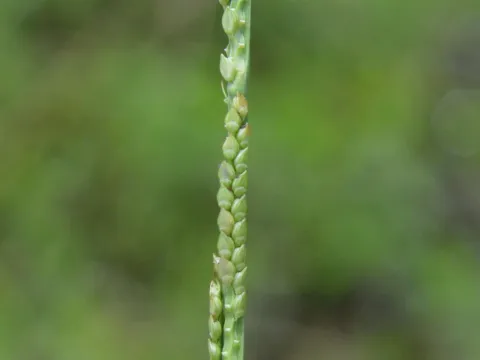
Panicum paludivagum
Panicum paludivagum
Panicum paludivagum is a perennial grass species belonging to the Poaceae family. It is naturally adapted to wetland ecosystems, commonly found in tropical and subtropical regions near water bodies, marshes, and periodically flooded areas.
What the section contains
Panicum paludivagum
The plant exhibits exceptional tolerance to waterlogged soil conditions, which is its primary botanical adaptation. It possesses a robust root system that helps anchor the plant and facilitates growth in soils with low oxygen levels.
Climate requirements include consistently high temperatures and abundant sunlight. As a tropical species, it is highly sensitive to frost, which limits its commercial cultivation to frost-free agricultural zones.
Soil fertility plays a significant role in biomass production. While the plant can survive in slightly acidic and nutrient-poor conditions, optimal yield is achieved in fertile loam soils with high moisture-holding capacity.
Agronomic management involves maintaining adequate moisture levels throughout the growing season. Nitrogen fertilization is essential during the vegetative stage to maximize leaf development and nutritional content.
The primary economic use of this culture is as a forage crop for livestock. Its ability to regrow rapidly after harvesting allows for multiple cuts per season, providing a steady supply of green matter.
The nutritional profile of Panicum paludivagum makes it suitable for grazing livestock, offering a reliable feed source during the wet season. Care must be taken during hay production due to high moisture levels in the stems.
Beyond animal nutrition, this grass is used in land restoration projects. It helps prevent soil erosion in flood-prone areas by creating a dense, protective vegetative cover that stabilizes the topsoil.
Yield potential varies depending on management intensity. Under favorable conditions with balanced fertilization, the plant produces significant quantities of biomass comparable to other improved tropical forage grasses.
Future agricultural development may focus on selecting genotypes with higher protein digestibility and improved resistance to environmental stressors to enhance its value as a forage commodity.
Fungal diseases represent the most significant threat to Panicum paludivagum, particularly in humid environments where pathogen transmission is rapid. Rusts and leaf spots are common issues that impact photosynthetic capacity.
Pest pressure is primarily driven by sucking insects such as aphids and leafhoppers. These pests can cause direct damage while also acting as vectors for various plant viruses that stunt crop growth.
Soil-dwelling pests like wireworms pose a risk to the root system, particularly in newly established stands. Damage to the roots can lead to plant mortality and overall thinning of the grass population.
Integrated pest management strategies, including crop rotation and the use of resistant varieties, are recommended to maintain field health. Monitoring should be increased during rainy spells.
Chemical control measures should be applied selectively, focusing on periods of high insect activity to prevent economic damage while minimizing the impact on local beneficial insect populations.