
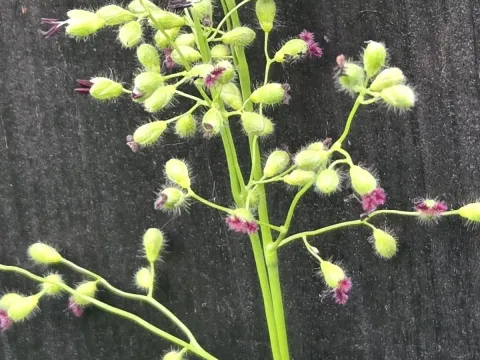
Leiberg's panicgrass
Panicum leibergii
Leiberg's panicgrass (Panicum leibergii) is a perennial grass species that belongs to the Poaceae family. It is native to the prairies of North America, where it serves as an important component of the natural grassland ecosystem.
What the section contains
Leiberg's panicgrass
The plant demonstrates a strong preference for well-drained soils and typically thrives in open, sunny habitats. It is well-adapted to the climatic patterns of the tallgrass prairie, showing resilience to seasonal temperature fluctuations.
Botanically, it features a tufted growth habit with narrow leaves and a characteristic paniculate inflorescence. This structure allows the plant to manage its water resources efficiently during the growing season.
In terms of soil nutrition, the plant is relatively undemanding compared to annual grain crops, making it a sustainable choice for certain types of low-input range management and land restoration projects.
The establishment of this crop requires adequate seed-to-soil contact and competition control in the initial stages of development, as the seedling growth can be relatively slow during the first season.
Like many species of the Panicum genus, this grass can be susceptible to various fungal pathogens, most notably rusts that affect the foliage and reduce the overall photosynthetic capacity of the plant.
Smut diseases are also a factor to consider, particularly when the crop is managed for seed production. Proper sanitation of equipment and selection of disease-free sites are critical management steps.
Insect pests such as grasshoppers and aphids are common threats that can significantly reduce the vigor of the plant during peak summer months if population levels become excessive.
Overgrazing or improper harvesting techniques can lead to the thinning of stands, which invites invasive weeds to occupy the space and increases the overall vulnerability of the crop to pests.
Effective management strategies include maintaining appropriate stocking densities on grazing lands and ensuring the diversity of the plant community to disrupt the life cycles of specific pests and pathogens.