
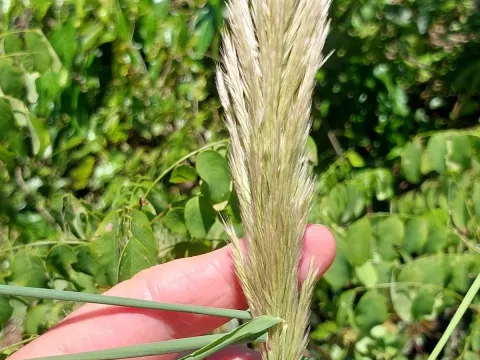
Leptocarydion
Leptocarydion
Leptocarydion, particularly the species Leptocarydion vulpiastrum, is an annual or perennial grass known for its ability to regenerate naturally in its native environment.
What the section contains

Leptocarydion
In tropical and subtropical regions, sowing is typically timed with the beginning of the rainy season to ensure sufficient soil moisture for germination.
When cultivating this grass for fodder, it is essential to prepare a firm seedbed to allow for consistent seedling establishment across the field.
Given the small size of the seeds, shallow planting is required, followed by light rolling to improve soil-to-seed contact and speed up the emergence.
Proper plant density should be maintained by adjusting the seeding rate, which helps minimize weed pressure during the critical early stages of growth.
The plant belongs to the Poaceae family and is native to African savannas, where it has evolved to thrive in hot and semi-arid conditions.
It exhibits strong drought tolerance, making it a suitable candidate for marginal lands where other crops might struggle to survive.
Leptocarydion prefers well-drained sandy or loamy soils, as it does not tolerate waterlogging, which can easily damage its root system.
This grass is highly photophilous and requires full sun exposure to maintain active photosynthesis and maximize biomass accumulation throughout the season.
Ideal temperatures for growth range from 25 to 35 degrees Celsius, aligning perfectly with the climatic conditions of many arid and semi-arid zones.
The yield of Leptocarydion is primarily influenced by soil nutrient availability and the consistency of rainfall patterns throughout the growing cycle.
Strategic application of nitrogen fertilizers can significantly boost biomass production, making the plant more profitable for intensive forage systems.
As a pasture plant, it provides a stable source of fiber for livestock, with good recovery rates after grazing or periodic mechanical mowing.
Seed production yields depend heavily on weather conditions during the maturation phase, as excessive winds or rain can lead to significant shattering.
Overall, Leptocarydion serves as a reliable biomass source, contributing to the stability of forage supplies in warmer climates where other grasses fail.
Fungal diseases represent a major threat to Leptocarydion, especially during prolonged periods of high humidity and poor air circulation within the stand.
Cereal rust can affect the foliage, reducing both the aesthetic quality of the crop and its nutritional value for livestock feed.
Insect pests, such as locusts and grasshoppers, are known to cause severe damage if they invade fields in high numbers, necessitating rapid intervention.
Root rot remains a concern if drainage is poor, as saturated soil prevents root respiration and creates an environment for soil-borne pathogens.
Integrated pest management strategies, including regular field monitoring, are recommended to protect the crop from major outbreaks and minimize losses.
Harvesting for green fodder should be completed before the flowering stage, as this ensures the highest digestibility and nutrient content of the grass.
For hay production, the material should be mowed and cured in the field under dry conditions to preserve the quality of the dried biomass.
Seed harvesting must be carried out at full maturity, requiring precise timing to avoid excessive shattering, which is a common challenge for this genus.
Mechanical harvesting equipment should be calibrated to maintain an appropriate stubble height, which encourages healthy regrowth for the next cycle.
Proper post-harvest drying and storage are critical to preventing spoilage, with moisture levels maintained below 14% to ensure long-term shelf life.