
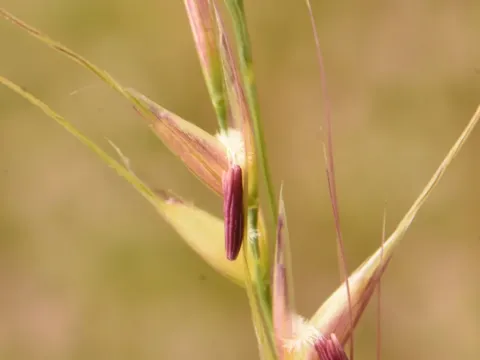
Lemmon's needlegrass
Stipa lemmonii
Lemmon's needlegrass (Stipa lemmonii) is a perennial bunchgrass belonging to the Poaceae family. It is native to the western parts of North America, particularly thrives in the mountainous regions of California and Oregon.
What the section contains
Lemmon's needlegrass
This species is well-adapted to dry, rocky, or gravelly soils. It prefers open areas and woodlands where sunlight is abundant and competition for water is relatively low compared to more fertile lowlands.
Botanically, it forms dense tufts or bunches. The leaves are typically narrow and rolled, an adaptation to drought. The inflorescence is a panicle with long, awned florets characteristic of the Stipa genus, facilitating seed dispersal.
The plant performs best in a climate with cool, moist winters and dry summers. It is considered a cool-season grass, meaning its primary growth phase occurs before the peak heat of midsummer sets in.
In agricultural and ecological contexts, Lemmon's needlegrass is valued for its hardiness in erosion control and land rehabilitation. It serves as a vital component in restoring native plant communities in arid landscapes.
While generally robust, Stipa lemmonii can suffer from fungal pathogens if soil drainage is poor. Root rot is a common issue in waterlogged conditions, which should be avoided when selecting planting sites.
Insect pests such as aphids or stem-boring beetles may occasionally attack the plants, though significant outbreaks are rare in well-managed native stands. Regular monitoring helps maintain plant health.
The most significant threat to native populations is the encroachment of invasive annual weeds. These weeds often outcompete the slower-growing bunchgrass for soil moisture during the critical early growth stages.
Overgrazing is detrimental to this species, as it reduces the plant's ability to store energy in the roots. Proper management of livestock grazing is essential to ensure the longevity of the stand.
To prevent disease transmission, seed sources should be clean, and equipment used in the field should be disinfected if moving between different locations during harvesting or maintenance operations.