
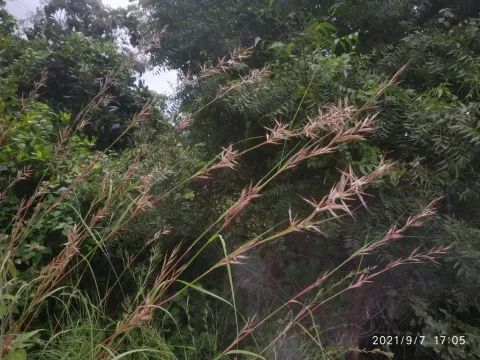
Lemongrass
Cymbopogon
Lemongrass (Cymbopogon), a member of the Poaceae family, is a tropical perennial grass that thrives in frost-free environments. Sowing usually occurs in early spring indoors to provide the consistent heat required for germination.
What the section contains


Lemongrass
The seeds require surface sowing as they are light-dependent, so they should be pressed lightly into the soil but not buried deeply, keeping them consistently moist.
Optimal germination occurs at temperatures between +20°C and +28°C, with seedlings appearing within 14 to 21 days under correct light conditions.
In commercial agriculture, vegetative propagation is often favored over seeds, as dividing existing clumps ensures genetic uniformity and faster establishment.
Transplanting into the open field is done after the danger of frost has passed, ensuring the plants receive sufficient space to develop their expansive root systems.
Lemongrass is a heliophilic plant, requiring full sun exposure for at least 6 to 8 hours daily to maximize the production of its characteristic essential oils.
It prefers fertile, well-draining sandy loam soils with a pH ranging from 6.0 to 7.5. Waterlogging must be avoided to prevent rhizome decay.
A warm climate is essential; the plant exhibits significant growth retardation if temperatures drop below +15°C and cannot survive hard freezes.
Regular irrigation is necessary to maintain soil moisture, particularly during the peak growing season, as the plant has high transpiration rates.
Balanced fertilization, particularly with nitrogen during the initial growth phase, significantly increases the harvestable biomass of the crop.
Root rot is the most common agronomic issue for lemongrass, typically caused by poor soil drainage or over-irrigation during cooler periods.
Pests such as spider mites and aphids are known to cause damage to the foliage, which can stunt development and reduce the oil yield quality.
Fungal infections, including leaf blight and rust, may occur in high-humidity conditions, necessitating good airflow and careful spacing between rows.
Integrated Pest Management (IPM) strategies are highly recommended to keep populations of harmful insects under control without contaminating the harvest.
Field sanitation, such as removing debris and weeds, is vital to reduce the reservoir of pathogens that could affect the health of the lemongrass stand.
The harvest period typically begins 6 to 8 months after planting, once the stalks have reached a marketable thickness and height.
Stalks are harvested by cutting them close to the base, which leaves the rootstock intact for regrowth and subsequent harvests in following seasons.
For the production of essential oil, the entire above-ground biomass is collected and processed immediately via steam distillation to prevent loss of volatile compounds.
Culinary harvest involves stripping the outer fibrous leaves to access the tender white core, which is highly valued for its citrus-like flavor profile.
Post-harvest handling requires either immediate usage, cold storage, or careful air-drying in shaded conditions to preserve the integrity of the essential oils.