
Creeping meadow foxtail
Alopecurus arundinaceus Poir.
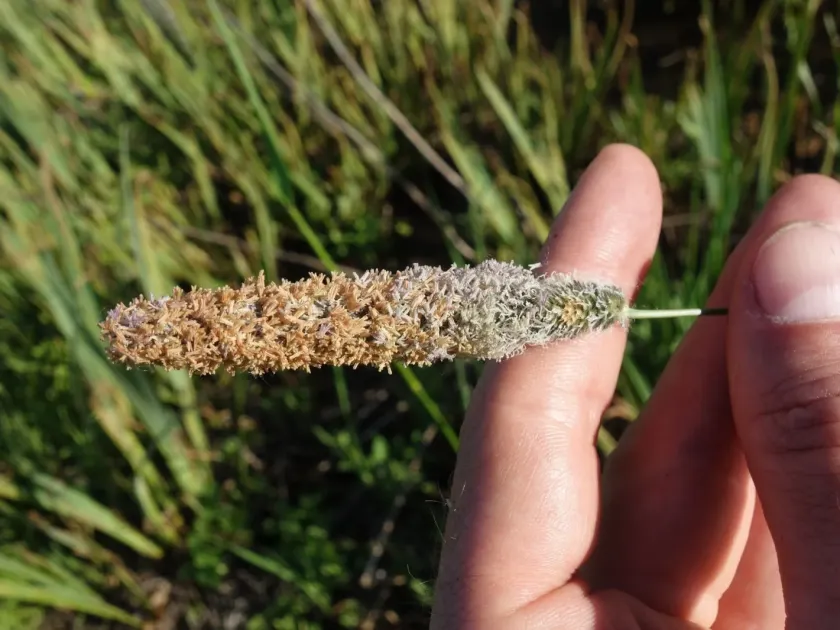
Description
Sowing dates
The optimal time for sowing Creeping meadow foxtail is early spring, when soil moisture is at its peak. The soil should be finely tilled to ensure a perfect seedbed, as small seeds require precise depth control.
Seeding rates usually range between 8 and 12 kg per hectare, depending on the intended use—whether for intensive hay production or as a pasture component. A sowing depth of no more than 2 cm is critical for successful emergence.
Post-seeding compaction is highly recommended to ensure the seeds have consistent contact with the soil particles. This practice is essential for conserving moisture in the upper soil layer, which is vital for the slow-germinating seeds.
Establishment is relatively slow in the first year as the plant invests energy into developing its rhizomatous root network. Growers should manage expectations during the first season and focus on weed control to reduce competition.
Under favorable conditions, the grass will form a dense, uniform sward by the second or third year. Once established, the stand becomes very competitive and can persist for many years with proper management.
Growing requirements
Creeping meadow foxtail (Alopecurus arundinaceus Poir.) is a robust perennial grass belonging to the Poaceae family. Known for its creeping rhizomes, it is highly valued for its ability to thrive in environments that are unsuitable for many other forage species.
The defining characteristic of this plant is its exceptional tolerance to waterlogging and flooding. It is naturally adapted to floodplains and marshy areas, where it can survive periods of inundation lasting several weeks without losing productivity.
This species thrives in heavy soils, including clay and silty loams. It has a high ecological amplitude and demonstrates remarkable salt tolerance, making it an excellent candidate for reclaiming marginal, slightly saline soils.
Its natural range covers large areas of Eurasia and Northern Africa. In these regions, it is frequently found in river basins, seasonally wet meadows, and around wetland perimeters, acting as a crucial component of the natural landscape.
Beyond its agricultural value, the plant plays a vital role in soil stabilization. Its dense root system helps prevent erosion in unstable, moisture-rich areas, effectively binding the soil and improving its structural integrity.
Yield
Creeping meadow foxtail is appreciated for its early-season growth. It emerges earlier than many other cool-season grasses, providing a valuable early source of green forage or an early hay cutting for livestock producers.
The productivity of the crop is closely tied to nitrogen availability and consistent soil moisture. In fertile floodplain soils, it provides high-quality forage that is highly palatable to cattle, horses, and sheep throughout the season.
When harvested for hay, the quality is generally high. The forage is soft and easy to digest, which makes it a preferred choice for supplemental winter feeding. Proper timing of the harvest is key to maximizing nutritional content.
In grazing scenarios, the plant recovers rapidly after defoliation. Its ability to spread via rhizomes allows it to fill in gaps in the pasture, maintaining a high density and suppressing the invasion of unwanted weeds.
Sustainability is a core benefit of this species. Because it is a long-lived perennial, it eliminates the need for frequent re-seeding, making it a cost-effective solution for permanent grasslands in moist conditions.
Main diseases and pests
The plant can be susceptible to various grass-specific pests, such as cereal flies, especially in stressed conditions. Monitoring and maintaining overall plant health through balanced fertilization are the best forms of defense.
Fungal diseases like rust can occur in dense, humid stands with poor air circulation. Regular mowing or grazing to remove excess biomass helps lower the risk of disease outbreaks in the canopy.
Weed management is most critical during the establishment phase. Once the stand is fully developed, it is generally aggressive enough to outcompete most invasive species, but initial oversight is necessary.
Soil-borne pathogens may affect the root system if the soil remains stagnant for too long without natural aeration. Proper management of floodplain dynamics, where possible, helps mitigate these risks.
Overall, maintaining a robust, well-fertilized stand is the most effective way to prevent yield loss. Proper agronomic care ensures that the plant retains its vigor and natural resistance against common environmental pathogens.