
Florida paspalum
Paspalum floridanum
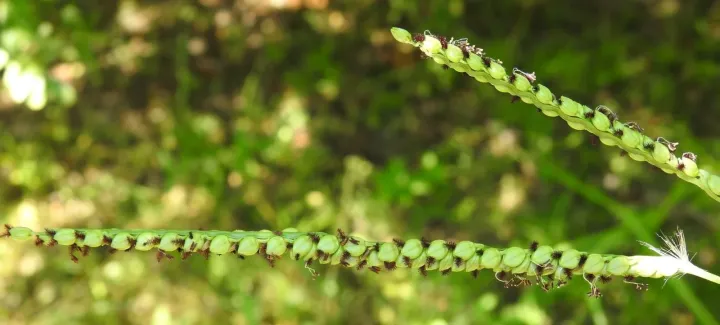
Description
Sowing dates
Florida paspalum is typically planted in the spring when soil temperatures have consistently risen. Optimal sowing occurs once the danger of frost has passed to ensure a robust establishment.
Seeds should be shallowly sown at a depth of 1 to 2 centimeters. Because the seeds are small, excellent soil-to-seed contact is essential for uniform germination and early plant survival.
Preparing a clean seedbed is critical; removing competitive perennial weeds beforehand significantly increases the success rate of the new stand during the first growth stages.
Standard row seeding is the most common method, allowing for easier mechanical weeding if necessary, although the plant tends to spread and thicken over time as the root system matures.
Post-sowing rolling is recommended to keep the moisture in the topsoil layer, which supports the slow-to-start seedlings until they develop a deeper, more resilient root system.
Growing requirements
As a member of the Poaceae family, Florida paspalum is a perennial grass known for its robustness. It is native to the southeastern United States and thrives in various environments.
The plant prefers sunny locations and is highly adaptable to soil types ranging from moist sandy loams to heavier clay textures. It possesses a moderate tolerance for temporary flooding.
Temperature-wise, it favors warm growing seasons. While it exhibits some drought tolerance, maximum biomass production is achieved when the soil moisture remains consistent during the peak summer months.
Soil pH requirements are broad; however, it tends to perform best in slightly acidic to neutral soils. Liming can be beneficial in highly acidic areas to optimize nutrient availability.
Proper nutrient management, particularly with phosphorus and potassium, helps in establishing a dense root system that allows the grass to survive through less favorable climatic conditions.
Yield
Florida paspalum is primarily valued as a forage crop for livestock. It provides a good source of nutrition when managed correctly and harvested at the vegetative stage of growth.
For high-quality hay production, harvesting should occur before the seed heads fully emerge. This ensures higher protein content and improved digestibility for cattle and other ruminants.
Grazing management is crucial. Rotational grazing allows the plants to recover after being grazed down, ensuring that the rhizomes remain healthy and the stand persists for multiple seasons.
Biomass production is significantly enhanced by nitrogen fertilizer applications during the growing season, provided that moisture levels are sufficient to allow nutrient uptake.
- Excellent soil erosion control due to dense root networks.
- High palatability for livestock when grazed at the right height.
- Long-term durability in permanent pasture setups.
Main diseases and pests
Like many perennial grasses, Florida paspalum can be susceptible to fungal diseases such as rust and leaf spot, especially during periods of high humidity and poor air circulation.
Insects such as aphids and leafhoppers can occasionally cause damage. Monitoring these pests is important to prevent them from weakening the plant or acting as vectors for plant viruses.
The best defense against pests and diseases is maintaining a healthy, vigorous crop. Proper fertility management and avoiding overgrazing help the plant recover from minor infestations.
In cases of severe outbreaks, selective fungicide application might be necessary, though cultural practices such as mowing or adjusting stocking rates are often more effective long-term strategies.
Ensuring that the field is well-drained where possible reduces the incidence of soil-borne pathogens and root rot that can occur in consistently waterlogged conditions.