
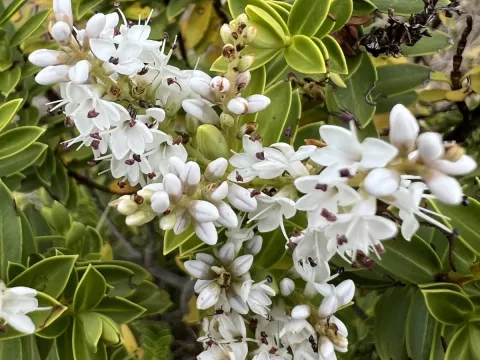
Veronica brachysiphon
Veronica brachysiphon
Veronica brachysiphon, often identified in literature as a species of Hebe, is an evergreen shrub belonging to the Plantaginaceae family. It is recognized for its dense, rounded habit and neat foliage, making it a popular choice in ornamental gardening.
What the section contains
Veronica brachysiphon
The species originates from New Zealand, which dictates its preference for temperate maritime climates. It thrives in regions where winters are not excessively harsh, as it requires protection from severe frost and biting winds.
Regarding soil requirements, the plant demands excellent drainage. It performs best in fertile, well-draining soils with a neutral to slightly acidic pH level. Heavy, waterlogged soils should be amended with organic matter or grit to ensure root health.
The ideal location for this shrub is a position that receives full sun or partial shade. Exposure to direct sunlight is crucial for maintaining a compact growth habit and encouraging the plant's characteristic dense foliage arrangement.
The primary horticultural use is aesthetic. Due to its uniform growth, it is widely utilized for low hedges, foundation planting, and container gardening, offering structure to the landscape throughout all four seasons of the year.
The main threats to the plant include fungal pathogens such as root rot, which are typically exacerbated by poor soil drainage and stagnant water. Overwatering during cooler months is a significant risk factor for the shrub's longevity.
Pests like aphids and spider mites can occasionally affect the plant, particularly in spring and summer. Infestations are generally manageable with standard horticultural soaps or systemic insecticides if detected early.
Exposure to extreme cold can lead to dieback in the foliage. Providing a sheltered position against a wall or hedge can act as a buffer against low temperatures and desiccating winds during the winter season.
Poor air circulation within the canopy can encourage the development of powdery mildew. Strategic pruning to thin out branches helps maintain airflow and reduces the probability of infection in humid environments.
Regular maintenance, including the removal of deadwood and the monitoring of soil moisture, is essential for keeping the plant in a healthy condition. Proactive management prevents the development of complex health issues.