
Veronica baumgartenii
Veronica baumgartenii
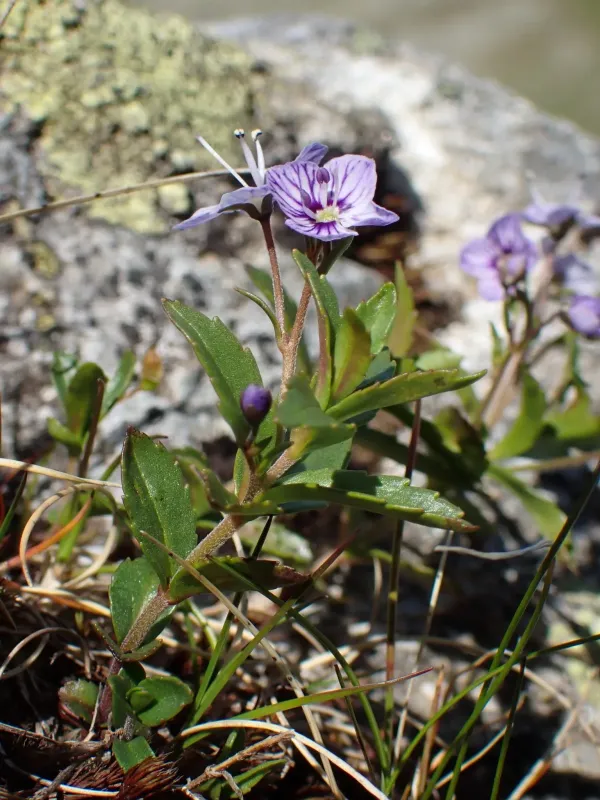
Description
Growing requirements
Veronica baumgartenii is a perennial herbaceous plant belonging to the Plantaginaceae family. It is primarily identified as an alpine species, naturally distributed in high-altitude environments such as the Carpathian mountain ranges.
This plant is not utilized as a conventional agricultural crop. Its economic and ecological value lies in its role as a representative of mountain flora, making it a subject of interest for botanical study and biodiversity conservation rather than commercial farming.
The species has specific soil requirements, favoring rocky or stony substrates that provide excellent drainage. It thrives in soils with low organic content, similar to the scree slopes where it is naturally found in the wild.
Climatic adaptability of Veronica baumgartenii is limited to alpine and subalpine zones. It requires significant temperature drops at night and cool, well-ventilated conditions during the day to complete its growth cycle successfully.
Botanically, the plant displays features typical of alpine flora, including a compact growth habit and specialized leaf structures. These adaptations are crucial for surviving intense UV radiation and the physical stressors characteristic of high-mountain elevations.