
Veronica bellidioides
Veronica bellidioides
Description
Growing requirements
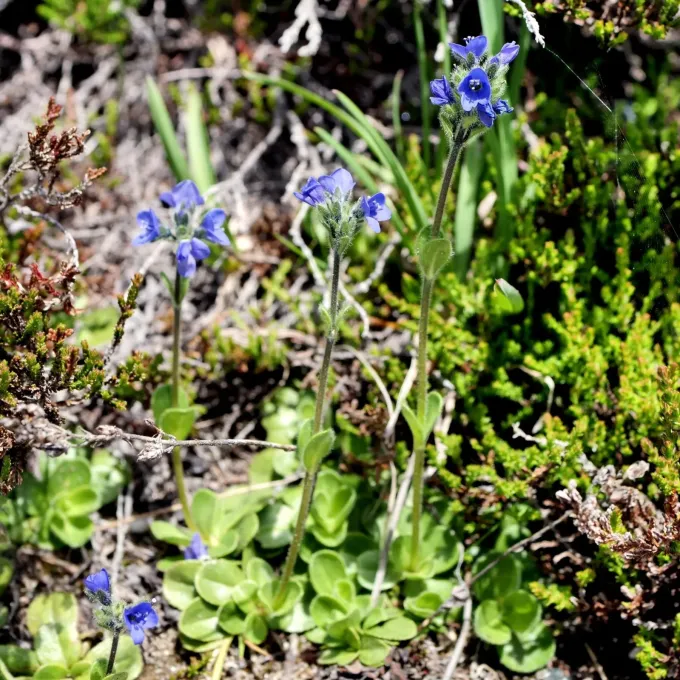
Veronica bellidioides, commonly known as the daisy-leaved speedwell, is a perennial herbaceous plant belonging to the Plantaginaceae family. It originates from the high-altitude regions of Europe, specifically the Alps and Pyrenees, where it thrives in rocky habitats and alpine meadows.
Botanically, the plant is characterized by its basal rosettes of obovate leaves and erect, hairy stems that typically reach a height of 5 to 15 centimeters. The inflorescences are dense racemes of small, violet to pale blue flowers, blooming during the mid-summer months.
The cultivation requirements for this species focus on replicating alpine conditions. It prefers full sun to partial shade in cooler climates and necessitates a well-draining, gritty soil mix. Moisture management is crucial, as the species is prone to root rot if the soil remains waterlogged for extended periods.
In terms of soil acidity, Veronica bellidioides prefers neutral to slightly acidic substrates. It is an excellent candidate for rock gardens, trough plantings, or alpine beds where proper drainage is ensured by the addition of mineral components such as gravel or perlite into the planting hole.
The primary horticultural use of this plant is decorative. Its ability to form compact, low-growing mats makes it ideal for edging pathways or filling crevices in rock walls. It is a slow-growing, perennial asset to any cool-climate garden that aims for authenticity in its alpine plant selection.
Main diseases and pests
The most common health issues affecting Veronica bellidioides relate to excessive humidity and poor soil structure. Powdery mildew can occur if there is insufficient air circulation around the foliage, while root rot often develops if the plant is forced to sit in stagnant water.
Pest management primarily involves monitoring for mollusks like slugs and snails, which find the soft leaves particularly appealing during the rainy season. To protect the plants, maintain an open, dry surface area around the crown and use appropriate barrier methods to discourage pest access.