
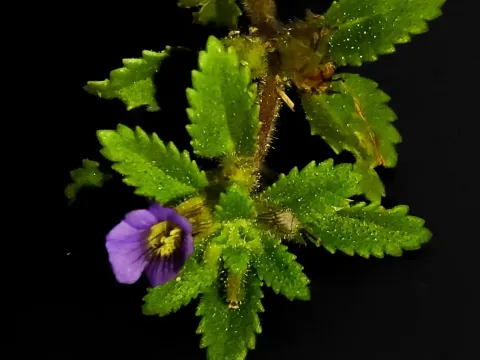
Stemodia verticillata
Stemodia verticillata
Stemodia verticillata, a member of the Plantaginaceae family, is a trailing herbaceous plant widely appreciated for its decorative foliage. Known for its rapid growth, it is often utilized in landscapes as a lush ground cover or in hanging baskets.
What the section contains
Stemodia verticillata
Originating from the tropical regions of Central and South America, this plant thrives in warm and humid environments. It typically grows in moist areas along streams or within dense forests, requiring consistent moisture to maintain its vitality and green appearance.
Botanically, it features delicate, whorled leaves along slender, creeping stems that easily root at the nodes. This habit allows the plant to form a dense, uniform mat, making it an excellent choice for filling spaces between larger ornamental plants.
The cultivation requirements focus on rich, well-draining soil that can hold sufficient moisture. A slightly acidic to neutral pH is preferred to ensure proper nutrient uptake, while the inclusion of organic matter like peat moss helps in maintaining the required soil texture.
Light requirements involve bright, filtered light or partial shade. While the plant can tolerate some morning sun, protecting it from intense midday heat is essential to prevent leaf scorch and dehydration, which can lead to quick loss of aesthetic quality.
Root rot is the most significant threat to Stemodia verticillata, usually occurring due to excessive watering or poor drainage. Once established, this fungal disease can cause the entire plant to collapse rapidly, necessitating strict irrigation control.
Spider mites are common pests that thrive in dry indoor or sheltered conditions. They cause stippling on leaves and can weaken the plant significantly; regular misting and increased air humidity are effective deterrents against these pests.
Whiteflies are another potential concern, feeding on the undersides of leaves. These insects secrete honeydew, which can encourage the growth of sooty mold, further damaging the aesthetic and physiological state of the plant.
Powdery mildew can appear during periods of high humidity and poor air circulation. It manifests as a white, dusty layer on the leaves and stems, requiring immediate action with appropriate fungicides and improved spacing for better ventilation.
Maintaining plant health involves routine monitoring and early intervention. Keeping the growing area clean and removing any dead or decaying plant material helps significantly in reducing the risk of pest colonization and fungal outbreaks.