
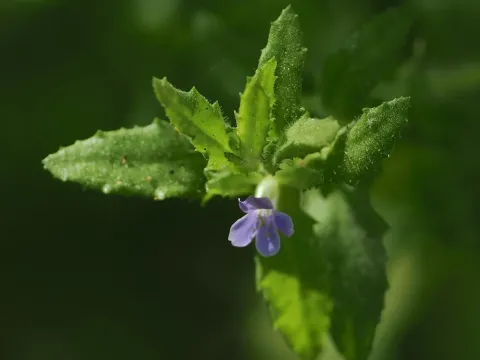
Stemodia maritima
Stemodia maritima
Stemodia maritima is a perennial herbaceous plant belonging to the Plantaginaceae family. Naturally occurring in the tropical coastal regions of the Americas and the Caribbean, this species has evolved to thrive in environments that challenge many other plant varieties, particularly those with sandy or saline conditions.
What the section contains
Stemodia maritima
The botanical structure of the plant is defined by its succulent, gland-dotted leaves which serve as an adaptation to minimize transpiration. These morphological traits allow the plant to maintain turgor pressure even when exposed to high solar radiation and the dehydrating effects of coastal salt breezes.
Cultivation of this species requires a substrate that mimics its natural habitat: sandy, well-aerated, and free-draining soil. Providing adequate drainage is critical, as the plant is highly susceptible to root rot if water is allowed to pool around the base, regardless of the soil nutrient profile.
Regarding climatic requirements, Stemodia maritima is strictly a warm-weather plant. It demands consistent temperatures and requires protection from any form of frost. In temperate zones, it is typically managed as an annual or a container-grown specimen moved indoors during the colder months.
In terms of agricultural and horticultural use, the plant is valued for its hardiness and ability to act as a ground cover. It is frequently utilized in coastal restoration projects and landscaping to stabilize shifting sands while providing a low-maintenance, aesthetically pleasing carpet of foliage.