
Russelia
Russelia
Russelia (Russelia) is a genus of perennial evergreen shrubs belonging to the Plantaginaceae family. Originally native to Mexico and parts of Central America, this plant is widely cultivated globally in tropical and subtropical climates as a decorative garden or container crop.
What the section contains

Russelia
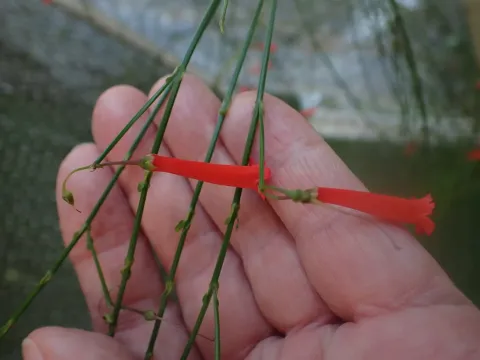
The plant is biologically recognized by its unique branching habit, featuring long, arching, rush-like stems. It produces brilliant, tubular, coral-red flowers that bloom prolifically throughout the growing season, earning it the common name of the fountain plant or coral plant.
For optimal growth, Russelia requires a location with bright, indirect sunlight. While it can tolerate partial shade, insufficient light levels often result in leggy growth and reduced flowering intensity, which diminishes its ornamental value.
Soil requirements are centered on excellent drainage. The ideal growing medium is a loose, well-aerated potting mix consisting of peat, loam, and coarse perlite or sand. It is highly sensitive to waterlogged conditions, which can lead to rapid root decline.
Temperature management is critical for the success of this crop. During the active growth phase, it prefers temperatures between 20°C and 25°C. During the dormant winter period, the plant should be kept in a cooler environment, ideally around 12–15°C, to ensure vigor for the next season.
The most common pests affecting Russelia in controlled environments are spider mites, mealybugs, and scale insects. These pests often proliferate when the plant is kept in environments with low humidity, which is common in indoor greenhouse settings.
Root rot, caused by overwatering or poor drainage, represents the most significant pathological threat to the crop. Symptoms typically manifest as drooping stems, yellowing, and necrotic lesions at the base of the plant where it meets the soil surface.
Integrated pest management (IPM) strategies for Russelia involve regular inspection of the stems and the use of horticultural soaps or systemic insecticides if infestations are detected. Maintaining appropriate humidity levels through misting helps mitigate spider mite risks.
Fungal issues, including powdery mildew, can occasionally occur if there is insufficient air circulation. Ensuring proper spacing between plants and utilizing fans in greenhouse structures can effectively prevent the buildup of stagnant, humid air.
Fertilization should be handled with care, focusing on balanced NPK ratios during the growing season. Over-fertilization, especially with excessive nitrogen, can encourage excessive vegetative growth at the expense of floral production and weaken the plant's structural integrity.