
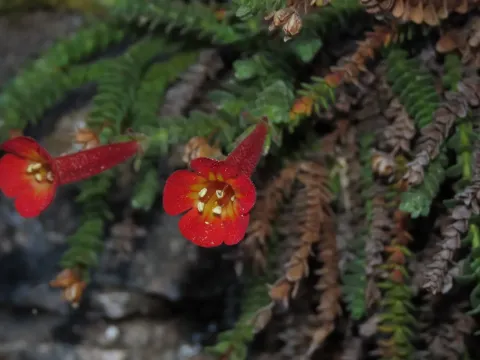
Ourisia polyantha
Ourisia polyantha
Ourisia polyantha is a member of the Plantaginaceae family, native to the high-altitude regions of Chile. This perennial herb has evolved to thrive in the specific cool and humid conditions found in the Andean mountain range.
What the section contains
Ourisia polyantha
Successful cultivation requires soil that is rich in organic matter, slightly acidic, and possesses excellent drainage properties. Because the plant is highly susceptible to root rot caused by waterlogging, it is best suited for rock gardens where natural drainage is optimal.
In its natural habitat, the plant grows in shaded or semi-shaded areas, avoiding direct exposure to intense midday sun. Excessive heat and low atmospheric humidity are detrimental to its health, limiting its potential range in various geographic zones.
Botanically, it forms low-growing rosettes of leathery leaves and produces vibrant tubular flowers in clusters. The root system is relatively delicate, requiring consistent, moderate moisture levels without creating an anaerobic environment in the soil.
Its primary use is in the niche sector of ornamental horticulture. Collectors of alpine flora prize this species for its intense floral display, making it a valuable addition to specialized garden displays and cool-climate landscape designs.
The primary threat to Ourisia polyantha is root rot, which occurs when the soil remains too wet for extended periods. This condition facilitates the rapid spread of fungal pathogens that can destroy the plant's root system within a short timeframe.
Garden pests, particularly slugs and snails, represent a constant risk to the foliage during the growing season. Implementing physical barriers, such as gravel mulch or copper tape, is a standard agronomic practice to protect the leaves from damage.
Aphid infestations can also affect the plant, particularly during the flowering stage, causing stunted growth and poor flower quality. Integrated pest management strategies, including biological controls or gentle insecticidal soap applications, are recommended.
Nutrient deficiencies or improper soil pH levels can lead to symptoms of chlorosis, weakening the overall plant vigor. It is essential to conduct soil testing and provide tailored micronutrient supplements to ensure the plant maintains its deep green color.
Effective disease prevention relies on maintaining good airflow around the plants and avoiding overhead irrigation. By keeping the foliage dry and ensuring well-drained conditions, growers can successfully mitigate the risk of common environmental threats.