
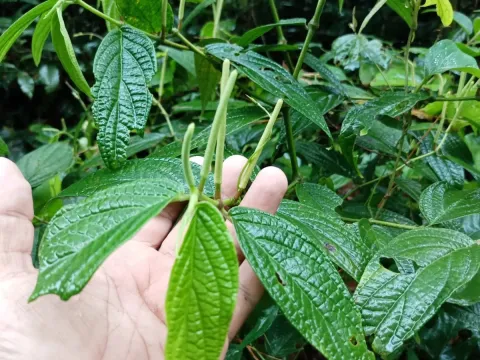
Piper hispidum
Piper hispidum
Piper hispidum is a perennial tropical shrub belonging to the Piperaceae family. While the plant propagates naturally via seeds, commercial cultivation often favors vegetative propagation through cuttings to ensure genetic consistency and faster establishment.
What the section contains
Piper hispidum
The optimal sowing time aligns with periods of high consistent temperatures, as the seeds require significant warmth and humidity to break dormancy. Pre-soaking seeds in growth promoters can significantly improve germination rates under controlled environments.
Seeds should be sown in a light, well-draining substrate at a depth of approximately 0.5 to 1 cm. Covering the containers with film helps maintain the necessary moisture levels and the 25–28 degrees Celsius required for successful development.
Transplanting or pricking out seedlings is conducted after the formation of two to three sets of true leaves. The plant exhibits a moderate growth rate and requires delicate handling to avoid damaging the sensitive root structure during the early stages.
For industrial or research purposes, planting in prepared beds or large containers is recommended, allowing sufficient space for the mature shrub, which can grow to several meters depending on environmental conditions.
This crop is highly demanding regarding air and soil humidity levels. It flourishes best in tropical or subtropical climates where annual temperature fluctuations are minimal and moisture is consistently available.
The ideal soil is neutral to slightly acidic, rich in organic matter, and must provide excellent drainage. Waterlogging is detrimental to the roots and must be avoided through appropriate irrigation management and soil structure improvement.
Piper hispidum prefers locations with dappled or diffused sunlight. Direct high-noon sun can cause leaf scorch, necessitating the use of shade cloths or the implementation of an agroforestry system that provides a natural canopy.
The ambient temperature should ideally remain between 20 and 30 degrees Celsius. Temperatures dropping below 15 degrees Celsius significantly inhibit growth, and the plant is susceptible to frost damage, which can be lethal.
Regular applications of complex mineral fertilizers, focusing on nitrogen during the active growth phase, are necessary to support the development of the lush foliage, which serves as the primary harvested product.
Piper hispidum is susceptible to various fungal pathogens, especially stem and root rots, which are commonly triggered by poor soil aeration and excessive humidity. Maintaining proper airflow is crucial for disease prevention.
Common pests include spider mites and scale insects, which often colonize the undersides of leaves to feed on sap. Integrated pest management, including the use of acaricides and systemic insecticides, is required to manage these populations.
Soil-borne nematodes can significantly impair root function, leading to stunted growth and eventual wilting. Sterilizing the planting medium is a standard preventative measure to protect the crop from soil-borne infestations.
Aphids can act as vectors for viral infections, resulting in leaf deformation and chlorosis. Frequent monitoring allows for early detection and intervention before the plant's structural integrity is compromised.
Sanitary pruning of dead or diseased branches is essential to maintain plant vigor and prevent the buildup of fungal spores within the canopy, ensuring the plant remains healthy throughout its life cycle.
The agricultural use of Piper hispidum focuses on the extraction of essential oils and the harvesting of biomass for medicinal and biochemical applications. Leaves and young shoots are the primary components collected.
Harvesting is typically done manually to prevent damage to the main stems, allowing the shrub to regenerate and provide multiple yields over several seasons. Ideally, harvesting occurs in the morning after dew has evaporated.
The collected raw material must be dried in shaded, well-ventilated areas. High-temperature drying is avoided to prevent the volatilization of valuable organic compounds and the loss of pharmacological potency.
Dried product should be stored in hermetically sealed containers away from direct light and moisture to maintain stability and prevent oxidation of the volatile compounds and active plant extracts.
The plant is increasingly recognized in ethnobotanical studies for its potential antiseptic and anti-inflammatory properties, reflecting its ongoing value in both traditional practices and modern agricultural research.