
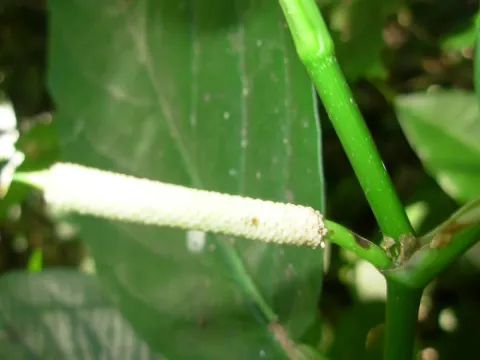
Piper glabrescens
Piper glabrescens
Piper glabrescens is a woody shrub belonging to the Piperaceae family, native to the tropical regions of the Americas. As a relative of the commercial pepper, it exhibits characteristic morphological traits, including persistent leaves and distinct inflorescence spikes that are typical of the Piper genus.
What the section contains
Piper glabrescens
Successful growth of this plant depends on creating a tropical microclimate. It thrives in diffused light conditions and requires high ambient humidity to remain healthy. Direct sunlight should be avoided to prevent leaf scorch, which can severely hinder the plant's metabolic activity and overall growth trajectory.
The soil requirements involve a well-draining, nutrient-rich medium with a slightly acidic to neutral pH. Incorporating organic matter, such as compost or peat, is essential to maintain soil structure and ensure adequate aeration for the delicate root system, which is prone to suffocation if waterlogged.
Agrotechnical practices focus on consistent irrigation and steady temperature control. The plant requires a stable thermal environment, ideally between 22 and 28 degrees Celsius. Any sudden fluctuation in temperature or a drop below 15 degrees Celsius can cause significant stress, leading to stunted leaf development.
Economically, Piper glabrescens is highly valued for its secondary metabolites. Research into its chemical composition suggests that the plant contains bioactive compounds that could be utilized in pharmaceutical applications or as botanical pesticides, making it an interesting candidate for specialized agricultural research.
The primary threats to this species include soil-borne pathogens like Phytophthora and Fusarium, which flourish in poorly drained soils. Implementing strict sanitation protocols and using high-quality substrate is the most effective strategy for preventing root rot and related fungal issues.
Insect pests, such as spider mites and mealybugs, are common challenges in nursery settings. Maintaining high relative humidity and regular manual inspections are essential for early detection. If infestations occur, the use of biological control agents or targeted insecticides is recommended to preserve plant health.