
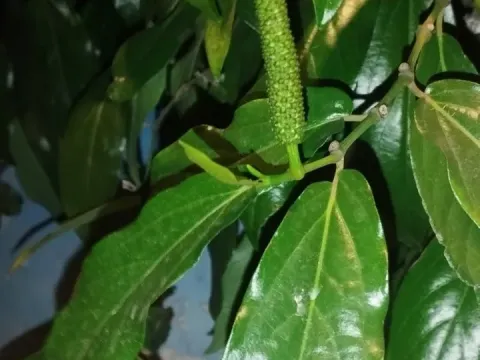
Piper chaba
Piper chaba
Piper chaba is a perennial tropical vine belonging to the Piperaceae family. In agricultural practices, propagation is primarily performed through stem cuttings, ensuring the preservation of desirable varietal traits and uniform plant development across the plantation.
What the section contains
Piper chaba
For planting, select sites with diffused lighting, as the crop is sensitive to direct, intense sunlight. Establishing a nursery with controlled humidity and temperature is essential for rooting the cuttings successfully before transplanting them to the field.
The soil must be rich in organic matter, loose in texture, and possess excellent drainage capabilities. Waterlogging is detrimental to the plant, so planting on slightly raised beds or well-drained slopes is recommended to protect the root system.
Since the plant is a vine, it requires support structures such as trellises or host trees. Proper spacing between plants is crucial to ensure adequate airflow, which is a key factor in preventing moisture-related fungal diseases.
Seed propagation is rarely used in commercial farming due to the slow growth rate and the high variability in offspring, making vegetative propagation the industry standard for maintaining high-quality crop yields.
This crop thrives in warm, tropical climates with stable temperatures ranging from +22 to +30 degrees Celsius. Maintaining these conditions throughout the growing season is vital, as fluctuations can significantly hinder growth and fruit set.
High humidity, typically between 70 and 85 percent, is necessary for optimal development. Regular watering is required, but farmers must carefully balance moisture levels to avoid saturated soil, which often leads to root rot in this sensitive species.
Nutrient management involves regular applications of high-quality compost and balanced organic fertilizers. Nitrogen is essential during the vegetative stage, while phosphorus and potassium are crucial for fruit development and the accumulation of essential oils.
While the plant is shade-tolerant, it requires sufficient diffuse light to maximize the production of active compounds like piperine. Strategically pruning the canopy allows for better light penetration and enhances overall plant health.
In greenhouse settings, maintaining consistent ventilation is as important as temperature control. Proper air circulation helps mitigate the risks associated with the high humidity required for the plant's growth.
Commercial yields typically begin about three years after planting. During this time, the vine establishes its root system and develops enough reproductive branches to sustain a reliable annual harvest.
The yield of Piper chaba depends on the plant's maturity and the intensity of the agronomic care provided. Periodic rejuvenation pruning of older, less productive vines helps maintain high productivity over the lifespan of the plantation.
Quality is measured by the pungency and aroma of the dried spikes. Harvesting at the correct stage of maturity is critical, as early harvesting leads to lower oil content, while late harvesting may result in overripe and degraded fruit quality.
Productivity can be boosted by applying mulch, which helps stabilize soil temperature and conserve moisture. This is especially important during dry periods to ensure the plant remains in a robust growing state.
Professional plantations often utilize record-keeping for individual sections to monitor growth rates and fertility requirements, allowing for data-driven adjustments in fertilization and water management.
Root rot, often caused by Pythium or Phytophthora species, is the most significant threat to Piper chaba. It is almost always a result of poor drainage or overwatering, necessitating strict adherence to irrigation schedules.
Pests like spider mites and mealybugs can cause significant damage, especially when plants are under drought stress. Integrated pest management strategies, focusing on biological controls, are preferred to maintain chemical-free produce.
Anthracnose is another common disease that impacts leaves and reproductive spikes. Management includes the immediate removal of infected plant debris and the use of copper-based fungicides when necessary to prevent spread.
Root-knot nematodes can severely limit the growth of the vines. To minimize this risk, growers should practice crop rotation and ensure that the initial planting material is free of nematodes and other soil-borne pathogens.
Maintaining a clean, weed-free field is vital, as weeds often serve as alternate hosts for pests and diseases. Regular scouting and preventative sanitation measures are the foundation of effective crop protection.
Harvesting is a delicate manual process performed as the spikes reach full maturity. Workers identify the harvest-ready spikes by their specific color changes, ensuring that each piece is collected at the peak of its chemical development.
Post-harvest processing involves immediate drying of the spikes under shade or in controlled drying facilities. Rapid but gentle drying is essential to prevent mold growth while preserving the essential oils and flavor compounds.
Once dried, the spikes are graded by size and pungency. Proper sorting ensures that only high-quality products are sent to the market, maintaining the reputation of the farm and meeting international food safety standards.
Storage must be in hermetically sealed containers to protect the dried spice from moisture, light, and humidity. Maintaining low, stable temperatures in the storage facility extends the shelf life of the product significantly.
In both culinary and medicinal applications, the quality of the final product is a direct reflection of the care taken during the harvest and drying phases, making these steps the most critical part of the production cycle.