
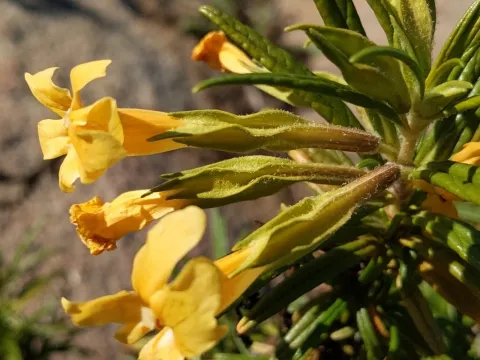
Southern bush monkeyflower
Diplacus longiflorus
Diplacus longiflorus, commonly known as the Southern bush monkeyflower, is a perennial subshrub belonging to the Phrymaceae family. Native to the arid slopes and chaparral regions of California, this species is highly adapted to nutrient-poor soils and drought conditions.
What the section contains
Southern bush monkeyflower
The plant exhibits a woody growth habit, featuring distinct tubular flowers that attract various pollinators, including hummingbirds. It is considered an excellent candidate for xeriscaping due to its ability to thrive with minimal supplementary irrigation once established.
Optimal growth requires full sun exposure to ensure a dense growth habit and abundant floral display. Partial shade is generally avoided as it promotes leggy stems and reduces the overall vigor of the shrub during the active growing season.
Soil requirements focus on extreme drainage. Heavy clay soils are unsuitable unless amended with significant amounts of grit or organic matter to prevent waterlogging, which is the primary cause of plant failure in non-native climates.
Agricultural and horticultural use is primarily ornamental. The species is highly valued in Mediterranean-style landscaping for its long-lasting bloom period and its functional role in erosion control on stabilized slopes and rock gardens.
The most significant threat to Diplacus longiflorus is root rot caused by Phytophthora species, typically triggered by overwatering during hot and humid periods. Proper irrigation management is essential for long-term survival.
Powdery mildew may appear on the foliage if air circulation is insufficient. To prevent this, planting sites should be chosen to ensure natural breeze patterns reach the plant, keeping the leaves dry and well-ventilated.
Pest pressures often involve aphids and spider mites, which congregate on the tender growth tips. Early intervention using horticultural oils or systemic insecticides can prevent significant aesthetic damage and reduced flowering.
Sanitation practices, such as removing fallen leaves and debris around the base of the plant, significantly reduce the incidence of soil-borne pathogens. Maintaining a clean garden environment is vital for healthy shrub growth.
Pruning should be performed after the primary flowering cycle to manage the plant's size and encourage new branching. This practice not only improves structural integrity but also removes potential overwintering sites for various leaf-damaging pests.