
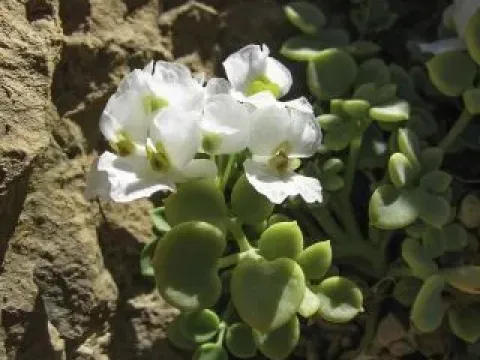
Sarcocapnos crassifolia
Sarcocapnos crassifolia
Sarcocapnos crassifolia is a perennial plant belonging to the Poppy family (Papaveraceae). Native to the Mediterranean region, it typically thrives in harsh, rocky environments, primarily in limestone crevices where it clings to vertical surfaces.
What the section contains
Sarcocapnos crassifolia
The plant is characterized by its succulent, fleshy leaves that store moisture, allowing it to survive periods of limited rainfall. Its growth habit is naturally low-spreading, making it an excellent choice for rock gardens or specialized succulent collections.
Environmental requirements for this species are specific: it demands high light intensity to maintain its compact, healthy form. It does not thrive in shade, where stems become etiolated and lose their succulent characteristics.
Soil composition must be highly porous, consisting largely of rock fragments, gravel, or coarse sand. The substrate should be low in organic matter and have an alkaline to neutral pH to replicate the natural limestone habitats of the plant.
Proper drainage is the single most important factor in the success of this crop. Containers must have multiple drainage holes, and the growing medium should be coarse enough to prevent water from remaining in the root zone for prolonged periods.
The most significant threat to Sarcocapnos crassifolia is root rot triggered by waterlogged conditions. Excessive irrigation, especially in non-growing seasons, quickly leads to the decay of the root system and death of the plant.
Fungal pathogens and molds can develop if air circulation is poor, particularly in enclosed greenhouse settings. Maintaining a steady airflow around the foliage is essential to prevent the development of powdery mildew and other blights.
Pests like spider mites and aphids may inhabit the plant, particularly if it is kept in environments with low humidity. Regular monitoring is necessary to catch potential infestations before they cause visible damage to the succulent leaves.
Inappropriate fertilization is another danger; as a plant adapted to nutrient-poor soils, over-fertilization can force weak, abnormal growth. It is advisable to use only minimal, highly diluted, low-nitrogen fertilizers if necessary.
Temperature fluctuations combined with high humidity create a risk of physiological stress. During the winter dormancy phase, keeping the plant relatively cool and completely dry is the best strategy to ensure survival until spring.