
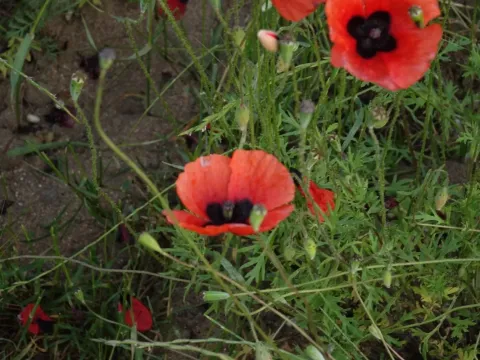
Sand poppy
Papaver arenarium
The sand poppy (Papaver arenarium) is an herbaceous annual plant belonging to the Papaveraceae family. As the name suggests, it is highly adapted to sandy and light-textured soils where typical field crops might struggle to establish a robust root system.
What the section contains
Sand poppy
The plant thrives in environments characterized by high light intensity. It is extremely sensitive to shading, which can lead to elongated, weak stems and significantly reduced seed production. For optimal growth, fields must be located in open areas with unobstructed sunlight.
Soil requirements focus primarily on drainage and aeration. While the species is drought-tolerant once established, it cannot withstand waterlogged conditions. Excess moisture in the root zone quickly promotes fungal decay and limits plant development.
Climatic preferences include temperate conditions. While the sand poppy can handle minor environmental stress, extreme humidity during the flowering phase is detrimental, often affecting the quality of the seed heads and promoting various foliar diseases.
The soil structure should be fine-textured to accommodate the small size of the poppy seeds. A well-prepared seedbed that is free of large clods allows for consistent seed-to-soil contact, which is essential for uniform germination and early plant vigor.
The optimal sowing time for the sand poppy is early spring, as soon as the soil has warmed up sufficiently to allow for active germination. Early establishment ensures that the plants develop strong roots before the onset of hotter, drier summer weather.
Standard agronomic practices suggest row planting, typically with spacing that facilitates mechanized weed control. Proper row spacing is vital because it allows for the use of cultivators to manage weeds without damaging the delicate root systems of the young poppy plants.
The seeding rate must be precisely calibrated to avoid overcrowding, which is a major precursor to disease outbreaks. A balanced plant population density maximizes individual plant growth and ensures a consistent yield of high-quality seeds at the end of the season.
The depth of seed placement is critical. Since the seeds are very small, they should be covered with only a very thin layer of soil, usually not exceeding 1 to 2 centimeters. Planting deeper can exhaust the seedling's energy reserves before it reaches the surface.
Post-sowing soil compaction via rolling is highly recommended. This practice improves capillary water movement, bringing moisture from deeper soil layers to the seed zone, which significantly increases the uniformity and speed of emergence.
The sand poppy is susceptible to several fungal diseases, particularly those that thrive in humid, still air conditions. Downy mildew and various types of wilt are common concerns that require diligent monitoring throughout the growing season to prevent significant losses.
Insect pests, including various beetles and aphids, can cause substantial damage to both foliage and reproductive parts. Early detection of pest populations allows for targeted management strategies that minimize environmental impact while protecting the crop.
Weed management remains the most challenging aspect of cultivation, especially during the early growth stages. Because the seedlings develop relatively slowly, they can be easily outcompeted by aggressive weeds if the field is not kept clean through mechanical or selective means.
Cultural control via crop rotation is the most effective long-term strategy for managing soil-borne pathogens. Returning the sand poppy to the same field too frequently increases the risk of soil-borne disease buildup, compromising future yields.
Integrated Pest Management (IPM) practices, including the use of resistant varieties where available and the timed application of treatments, are recommended to maintain high yield levels while minimizing the use of broad-spectrum pesticides.