
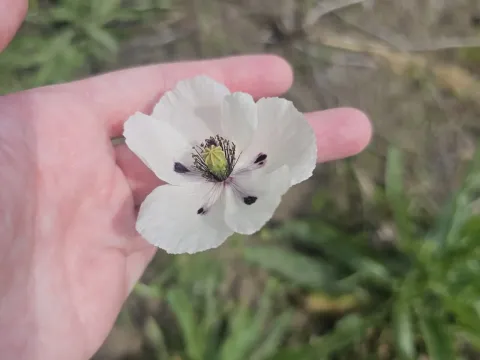
Rough poppy
Papaver albiflorum
The Rough poppy is primarily a winter or early spring crop. In temperate climates, sowing is recommended in late autumn before the onset of persistent frosts, allowing the seeds to undergo a natural stratification period.
What the section contains
Rough poppy
For spring sowing, it is essential to start as early as the soil is physically workable. This allows the seedlings to utilize the accumulated soil moisture before the onset of the hot and dry summer season.
The seeding depth should be minimal, as the seeds are extremely small. An optimal depth of 0.5–1 cm ensures sufficient soil-seed contact while allowing enough light for rapid germination.
Seeding density must be carefully managed to avoid overcrowding, which promotes stem lodging and the development of fungal infections. Row spacing is typically maintained between 20 and 45 cm depending on equipment.
After sowing, the field should be rolled to ensure a level soil surface, which promotes uniform seed distribution and prevents moisture loss in the topsoil layer.
As a member of the Papaveraceae family, the Rough poppy prefers well-lit areas. The plant is extremely heliophilous and cannot tolerate shading, which significantly reduces flowering intensity and seed production.
The crop has moderate soil requirements, preferring loose, sandy, or light loamy soils with good drainage. Waterlogging in the root zone is detrimental to the development of the plant.
The optimal pH level for this culture lies in the slightly alkaline to neutral range. Growth inhibition and a significant decrease in vegetative mass are often observed in acidic soil conditions.
A moderate temperature regime is preferred; while the poppy is quite frost-hardy, sudden temperature fluctuations during the flowering period can lead to premature flower drop and reduced fertility.
During active growth, the culture requires moderate moisture, though the seed maturation phase should coincide with dry, warm weather to prevent mold development on the seed capsules.
Fungal diseases, such as downy mildew, pose a primary threat to the crop. These pathogens spread rapidly under conditions of high humidity and overcrowded planting, infecting both leaves and stems.
Root rot is another significant threat, typically arising from poor agronomic practices or excessive soil moisture. This leads to rapid wilting and the loss of young seedlings.
Among the pests, the poppy curculio causes the most significant damage. Its larvae feed on the stem tissues and seeds inside the capsule, drastically reducing the yield and quality of the crop.
Aphids can also cause considerable harm by extracting sap from young plant tissues and acting as vectors for viral diseases that result in leaf deformation and stunted growth.
To effectively manage the spread of pests and diseases, strict crop rotation practices are advised, ensuring that poppy is not replanted on the same field for at least 3–4 years.