
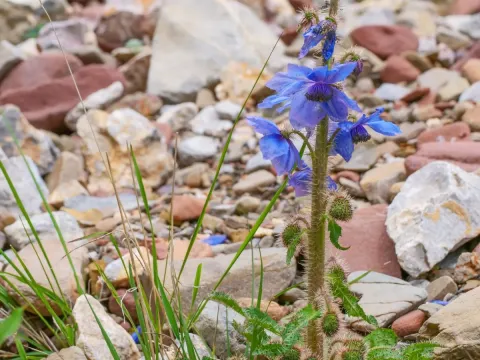
Rough poppy
Meconopsis rudis
Meconopsis rudis, a member of the Papaveraceae family, is a distinct species known for its hard, bristly foliage and vibrant blue flowers, hailing from alpine habitats.
What the section contains
Rough poppy
Sowing should ideally occur in autumn, allowing the seeds to undergo natural winter stratification, which is crucial for breaking dormancy in this species.
When starting seeds, a well-draining, peat-based mix with added horticultural grit is essential to ensure moisture management and seedling health.
Seedlings develop slowly, and it is imperative to avoid overwatering while they are in the initial stages of growth to prevent damping-off disease.
Once the seedlings are large enough to handle, transplanting them into their final location should be done with minimal disturbance to the taproot system.
Originating from the high-altitude landscapes of the Tibetan Plateau and Western China, this plant thrives in cooler climates with high atmospheric humidity.
It requires soil that is slightly acidic and extremely well-draining; heavy clays or waterlogged sites are fatal to the plant's health.
Positioning in the garden should provide partial shade, especially in areas where summer temperatures frequently exceed moderate levels.
Consistent moisture is key; the soil should never fully dry out, nor should it remain saturated, making mulch an indispensable part of the plant's care.
Good air circulation is vital to prevent the fungal issues that often plague alpine species moved to lower-altitude garden environments.
Root rot remains the most significant threat to Meconopsis rudis, usually triggered by poor drainage or excessive soil moisture during the dormant winter phase.
Pests such as aphids and spider mites may infest the foliage during hot, dry spells, causing chlorosis and weakening the overall plant vigor.
Gastropods like slugs and snails are highly attracted to the fresh foliage, making physical or biological barriers necessary for protecting young plants.
Careful monitoring for signs of wilt or fungal spots on leaves is essential, as swift action is required to save an infected individual.
Avoid heavy nitrogen fertilizers, as these can promote soft, succulent growth that is more susceptible to both environmental stress and pest attacks.