
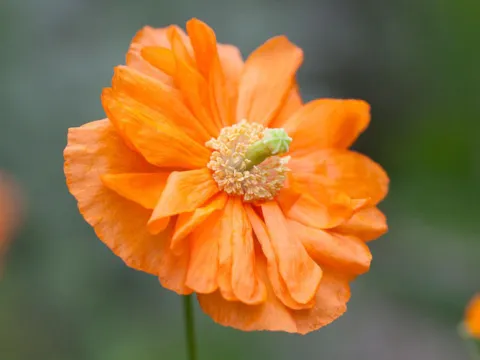
Spanish poppy
Papaver rupifragum
The Spanish poppy (Papaver rupifragum) is a perennial herbaceous plant belonging to the Papaveraceae family. It is valued for its hardiness and vibrant floral display, making it a popular choice for sustainable land use.
What the section contains
Spanish poppy
Seeds are typically sown directly into the field in early spring after the risk of severe frost has passed or in late autumn. The seeds are minute and should be sown on the surface of the soil with minimal covering, as they require light to germinate effectively.
Pre-sowing preparation of the seedbed is essential to ensure an even distribution of the seeds. The soil should be finely tilled and free from weed competition, which is crucial during the early stages of the plant's development.
Maintaining proper spacing, approximately 30-40 cm between individual plants, is recommended to allow for adequate airflow, which is critical for the long-term health and vigor of the poppy crop.
Under favorable conditions, germination typically occurs within three weeks. Thinning may be necessary if the plants are too crowded, ensuring each specimen has enough room for root expansion.
Originating from the mountainous regions of Southern Spain and North Africa, Papaver rupifragum is naturally adapted to sunny and well-drained environments, thriving in rocky or gravelly soils.
The crop requires full sun exposure to achieve its full potential. It is highly intolerant of waterlogged conditions, which can lead to rapid deterioration of the taproot system.
Regarding soil preferences, it thrives in well-draining, neutral to slightly alkaline soils. Heavy clay soils are generally unsuitable unless significant modifications are made to improve drainage.
The species is notably drought-tolerant once established, requiring supplemental irrigation only during prolonged dry spells or periods of extremely high heat.
While the plant is winter-hardy, in regions subject to harsh winters without snow cover, applying a layer of mulch around the base of the plant can help regulate soil temperature and prevent frost heave.
Downy mildew is the most common fungal disease associated with this species, particularly in regions with high humidity or poor air circulation. Proper spacing and site selection are the best preventative measures.
Root rot remains a major threat to the survival of the plant, usually caused by over-irrigation or planting in soil with poor drainage. Once root rot symptoms appear, curative treatments are often ineffective.
Aphids are the primary insect pest, often clustering on the buds and stems. Their feeding can weaken the plant and transmit viral diseases, necessitating early intervention with approved insecticides or biological control agents.
Weevils can also cause damage by feeding on the flower buds, which inhibits seed production and reduces the overall aesthetic and economic value of the plantation.
Integrated pest management, including regular field monitoring and the removal of severely infested plants, is essential for maintaining a healthy and productive poppy population.