
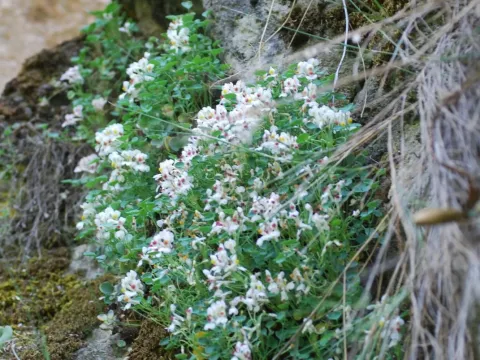
Sarcocapnos baetica
Sarcocapnos baetica
Sarcocapnos baetica is an interesting perennial herb belonging to the Papaveraceae family. It is a specialized plant that has adapted to life on limestone cliffs and rocky outcrops, making it a unique specimen for specialized gardening enthusiasts.
What the section contains
Sarcocapnos baetica
The plant originates from the southern regions of the Iberian Peninsula. Its natural habitat is characterized by harsh conditions, including steep gradients and minimal soil cover, where it thrives by utilizing crevices for moisture and protection.
Botanically, it features succulent-like foliage that stores moisture, allowing it to survive periods of drought. Its flowers, which appear in delicate shades, demonstrate a unique evolutionary adaptation to attract pollinators in high-altitude environments.
To cultivate this species successfully, gardeners must provide a very free-draining substrate, ideally incorporating limestone chippings or gravel. The plant thrives in alkaline conditions and requires full sun exposure to maintain its growth habit and vitality.
Regarding maintenance, Sarcocapnos baetica requires minimal intervention. Over-watering is the most common cause of failure; therefore, the substrate should be allowed to dry out significantly between waterings to prevent root rotting.
Root rot caused by excessive humidity or poor soil drainage is the primary threat to the health of Sarcocapnos baetica. It is essential to ensure that water never accumulates around the crown of the plant.
Slugs and snails are known to target the succulent leaves of the plant, especially during the spring growth phase. Using a coarse gravel mulch around the base of the plant can act as an effective deterrent against these pests.
Fungal infections can occur if the plant is kept in an environment with poor airflow or stagnant air. Providing good ventilation and ensuring the foliage stays dry are critical steps for preventing these issues.
In container cultivation, spider mites may become an issue if the ambient air is too dry and warm. Periodic monitoring and occasional light misting of the surrounding air (without soaking the leaves) can help mitigate this.
The species is generally robust if its specific environmental requirements are met. The best protection against any threats is mimicking its natural rocky, well-ventilated, and well-drained habitat.