
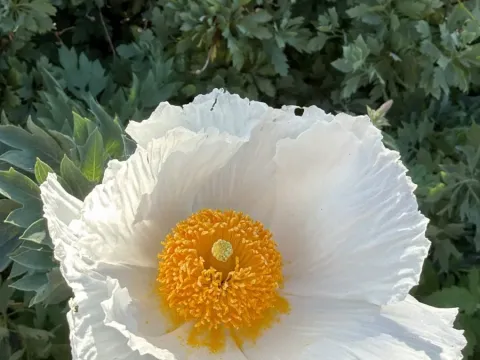
Romneya
Romneya
Romneya is a genus of flowering plants in the family Papaveraceae, commonly known as the Matilija poppy. Native to the canyons and dry slopes of California and Mexico, this perennial subshrub is highly valued for its large, white, crinkled petals and central cluster of golden stamens.
What the section contains
Romneya
The successful cultivation of Romneya requires a site with full sun exposure and excellent soil drainage. It thrives in gravelly or sandy soils that mimic its natural habitat. Heavy clay soils are generally unsuitable for this plant as they retain too much moisture and promote root decay.
In terms of climate, Romneya prefers warm, Mediterranean-like environments. While the established plants are drought-tolerant, they require consistent care during their initial growth phase. Protecting the root system from freezing temperatures and excess winter precipitation is essential in cooler regions.
Agronomic management of this crop involves minimal pruning, usually performed in late autumn or early spring to remove dead stems and encourage new basal growth. The plant develops an extensive rhizomatous root system, which makes it challenging to transplant once it is established.
The primary use of Romneya is within landscape design and ornamental horticulture. It is frequently employed in xeriscaping or as a focal point in borders, providing significant aesthetic value during its flowering season, which typically occurs from late spring through summer.
Fungal diseases are the most significant threat to Romneya, particularly in environments with poor drainage. Pathogens such as Phytophthora species can cause root rot, especially during wet, cool seasons. Preventive measures include planting on raised beds or slopes to ensure water run-off.
Common pests affecting this crop include aphids and spider mites, which tend to congregate on the undersides of leaves and succulent stems. Integrated pest management, involving the use of horticultural soaps or specific acaricides, is recommended to mitigate the impact of these infestations.