
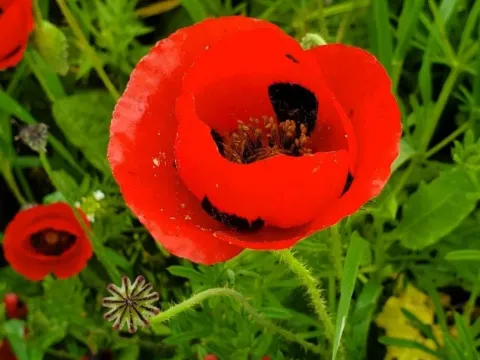
Syrian poppy
Papaver syriacum
Syrian poppy (Papaver syriacum) is typically sown in early spring as soon as the soil reaches a temperature of 5–8 degrees Celsius, though autumn sowing is also a viable option.
What the section contains
Syrian poppy
The seeds are exceptionally small, requiring a shallow sowing depth of only 1–2 centimeters to ensure they emerge correctly without expending all their stored energy.
Proper spacing is crucial; farmers usually maintain row widths of 30–45 centimeters to allow for adequate airflow and necessary mechanical weeding throughout the growth cycle.
Thinning is an essential part of the early agronomic process, as plants must be spaced 15–20 centimeters apart to prevent resource competition and ensure robust development.
Since early growth is relatively slow, keeping the field free of competitive weeds is vital for the survival and overall productivity of the crop during the first few weeks.
As a member of the Papaveraceae family, the Syrian poppy thrives in well-drained, fertile loamy or sandy soils that do not retain excess water, which could lead to decay.
This crop is inherently heliophilic and requires full sun exposure for the duration of its growth cycle to maximize the production of seeds and secondary metabolites.
While the Syrian poppy is known for its drought resistance, irrigation is beneficial during the leaf rosette formation phase to ensure the plant builds enough biomass for a high yield.
Neutral soil pH levels are ideal for this species, as extreme acidity or alkalinity can inhibit nutrient uptake and lead to stunted growth patterns in the field.
Mild temperatures ranging between 18 and 25 degrees Celsius during the flowering phase provide the best environment for healthy maturation of the seed capsules.
Downy mildew remains the most significant threat to Syrian poppy, particularly in environments with high humidity or poor ventilation between the rows of the crop.
Pests such as the poppy root weevil can cause extensive damage by feeding on stems and buds, significantly reducing the viability of the plant and its potential seed yield.
Root rot is a common ailment that typically occurs on heavy, waterlogged soils where the root system remains permanently damp, leading to sudden plant wilting and death.
Effective pest management involves integrated strategies, including the use of systemic insecticides if pest populations exceed the economic threshold during the growth phase.
Preventative cultural practices such as crop rotation—avoiding poppy cultivation on the same plot for at least three to four years—are critical for disease control.
Harvesting the Syrian poppy is initiated when the seed capsules have turned a distinct brown or greyish color and have reached a low internal moisture content.
A reliable indicator of maturity is the characteristic rattling sound of the seeds inside the capsule, confirming that the seeds have fully detached from the internal walls.
Depending on the scale of production, harvest is conducted either through manual clipping of the capsules or by using combine harvesters equipped with fine-seed headers.
Post-harvest processing involves immediate cleaning and drying of the seeds to prevent fermentation or mold growth caused by leftover plant debris or excessive moisture.
Storage should take place in cool, dry conditions with the moisture content of the seeds reduced to below 10 percent to ensure long-term stability and market quality.