
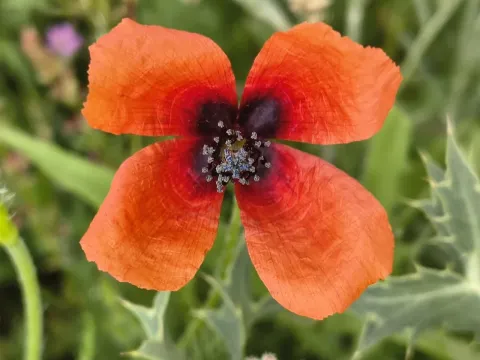
Wind rose
Roemeria argemone
Roemeria argemone, commonly known as the wind rose or rough poppy, is an annual herbaceous plant belonging to the Papaveraceae family. In agriculture, it is primarily categorized as a weed that infests cereal crops and fallow lands.
What the section contains
Wind rose
The plant originates from the Mediterranean and parts of Western Europe. It thrives in open, sunny habitats and is highly adapted to disturbed environments, frequently appearing in managed farmland.
It prefers well-drained, light-textured soils such as sandy or loamy sands. The plant requires excellent aeration to develop its taproot system, making it less common in heavy, waterlogged clay soils.
Botanically, it is characterized by finely divided, pinnate leaves and solitary flowers with four delicate red petals, often featuring a dark basal spot. The fruit is a long, narrow capsule that efficiently disperses seeds via wind and machinery movement.
There is no commercial cultivation of Roemeria argemone. Due to its content of alkaloids, the plant is potentially toxic to livestock and has no nutritional value for agricultural production systems.
The most effective management strategy against the wind rose involves tillage practices that disrupt the seedling stage, specifically during the early spring cultivation phase.
Chemical control using broad-spectrum herbicides targeting dicotyledonous weeds is the standard procedure for keeping field populations below the economic injury level.
The plant is relatively resilient to drought but can be adversely affected by fungal pathogens in high-humidity conditions, which might impact leaf health and seed production.
Certain insect pests that favor the Papaveraceae family can contribute to the natural suppression of the plant by feeding on its floral structures and developing seed pods.
Competition for nitrogen and light is the primary threat this weed poses to wheat or barley crops, leading to significant yield losses if not monitored during the tillering stage.