
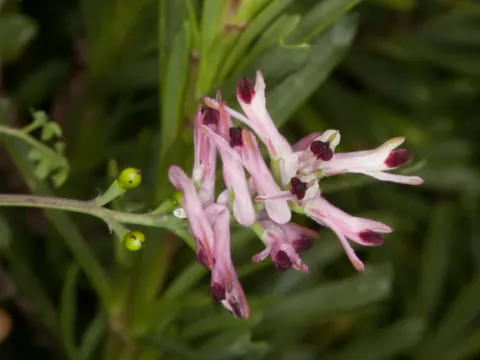
Two-colored fumitory
Fumaria bicolor
The two-colored fumitory (Fumaria bicolor) is an annual herb belonging to the Papaveraceae family. It is recognized for its unique inflorescences and slender, sprawling growth habit, which allows it to thrive in diverse ecological niches.
What the section contains
Two-colored fumitory
Originating from temperate regions of Europe and the Caucasus, the species is typically found in fields, roadsides, and open rocky terrain. It is known for its ability to adapt to varying light conditions, though it performs best in full sun.
Soil requirements involve well-drained, nutrient-rich substrates. The plant shows a preference for limestone-derived soils and can tolerate a range of pH levels, often thriving where other competitors may struggle due to soil compaction.
Climatic requirements focus on stable temperatures during the spring germination phase. The plant is moderately resistant to cold but requires consistent moisture to establish its deep, fibrous root system early in the season.
Agronomic management requires careful monitoring of plant density to prevent excessive competition. Proper spacing is essential to ensure adequate airflow and light penetration, which are vital for healthy plant development.
Common phytopathological threats include powdery mildew, which can significantly damage leaf tissues under conditions of high humidity and poor ventilation.
Root rot caused by stagnant water is a critical risk factor, particularly in heavy clay soils. Ensuring proper soil structure and drainage is the most effective way to prevent these subterranean issues.
Pest pressure is frequently observed from aphids and certain beetles that feed on the soft tissues of the stems and leaves. Early detection is crucial to maintain high biomass quality.
Integrated pest management strategies are recommended, focusing on maintaining biodiversity and natural enemies to control aphid populations naturally.
- Regular inspection for early symptoms of fungal growth.
- Application of organic fertilizers to boost plant resilience.
- Rotation of crops to disrupt the life cycles of soil-borne pathogens.