
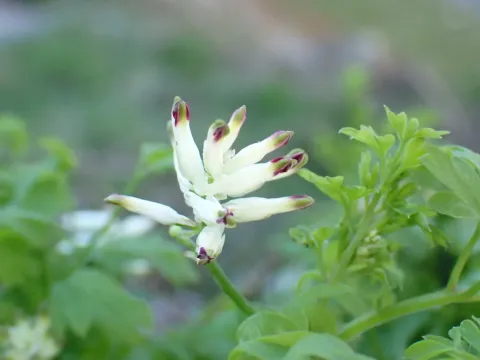
White ramping-fumitory
Fumaria capreolata
The white ramping-fumitory is an annual herbaceous plant that reproduces through seeds. In field conditions, seeds germinate primarily in autumn or early spring, which dictates the strategic management of the crop population.
What the section contains
White ramping-fumitory
For intentional cultivation, seeds should be sown in well-prepared soil at a depth of 1–2 centimeters. Optimal timing is early spring, as soon as the soil reaches a physical state suitable for working and consistent germination temperatures.
The plant exhibits high vigor, ensuring uniform stands if moisture levels are adequate. Seeding density is adjusted based on the objective, whether the goal is biomass production for herbal processing or collecting seeds.
In agro-ecosystems, managing the crop requires a focus on crop rotation to prevent the species from becoming a self-seeding weed. Monitoring seedling emergence is crucial during the early stages of the agricultural cycle.
The plant is highly adaptable to disturbed soils, which explains its prevalence in various habitats. When cultivated, maintaining consistent soil moisture during the first few weeks after sowing is vital for successful establishment.
This species, belonging to the Papaveraceae family, prefers a temperate climate with reliable rainfall. It thrives in sunny locations but can tolerate partial shade, which is often beneficial during the heat of the summer season.
Soil preferences include light, well-drained loams or sandy soils. Excessive waterlogging in the root zone is detrimental, so field selection should focus on areas with good drainage capacity to ensure healthy root development.
The ideal soil pH is near neutral or slightly alkaline. A high humus content supports vigorous branching of the stems, which is essential for maximizing the yield of the aerial parts used in pharmacological applications.
The temperature range of 15–22 degrees Celsius is most favorable for photosynthesis and the accumulation of secondary metabolites. Excessive heat can accelerate the plant's life cycle, shortening the duration of the biomass production phase.
Effective management includes maintaining balanced nitrogen-phosphorus fertilization, which stimulates foliage growth. Proper spatial arrangement is necessary to reduce competition for nutrients in dense plantings.
The yield of white ramping-fumitory depends significantly on agricultural practices and seasonal weather patterns. Under favorable conditions, producers can expect to harvest 10–15 tons of high-quality biomass per hectare.
Harvesting for medicinal purposes must occur during the peak flowering stage. During this time, the concentration of fumaric alkaloids is at its maximum, ensuring high-quality raw material for industrial processing.
Seed collection requires careful timing to prevent shattering, as the pods tend to open easily upon full maturity. Harvesting should be initiated as soon as the majority of the fruits begin to turn color.
Commercial yields are stabilized by regular irrigation and targeted soil nutrition. The quality of the end product is determined by the absence of weeds and the purity of the collected herbal material.
Biological features allow for multiple collection cycles if the harvest is managed correctly, as the plant possesses a strong ability to produce lateral shoots after the initial cutting of the main stems.
While the white ramping-fumitory is relatively hardy, it can be susceptible to powdery mildew during periods of high humidity. Maintaining adequate space between plants to ensure airflow is the most effective preventative measure.
Root rot may occur in fields with poor drainage, particularly in clay-heavy soils. Proper soil structure management and irrigation scheduling are vital to protect the root system from pathogenic soil-borne fungi.
Aphids are the primary pests that damage young leaves and floral buds. Regular scouting should begin as soon as the first true leaves appear, with interventions using biological control agents if populations exceed thresholds.
Competition from other aggressive weed species can suppress the crop during its early development. Timely cultivation between rows and the use of selective management techniques help maintain the purity of the crop stand.
Integrated pest management (IPM) strategies, including biological monitoring and crop rotation, are essential for keeping the field healthy without over-relying on chemical inputs.
Harvesting the aerial parts is performed during full bloom to ensure the highest concentration of active components. Stems are cut 5–10 centimeters above the soil surface to facilitate the health of the base for regrowth.
Post-harvest processing involves immediate drying in shaded, well-ventilated structures. Direct sunlight exposure should be avoided to prevent the degradation of chemical compounds and maintain the plant's natural color.
For seed production, the crop is left to dry until the pods are mature. Harvesting is carried out with specialized equipment configured to handle small seeds and minimize loss during the cutting and threshing process.
Storage of the finished product requires low-humidity environments to prevent mold growth. Proper packaging is necessary to protect the quality and chemical stability of the herb until it reaches the processing facility.
Quality control standards involve testing the dried material for moisture content and purity. Only products meeting strict pharmaceutical standards are approved for further manufacturing and medicinal use.