
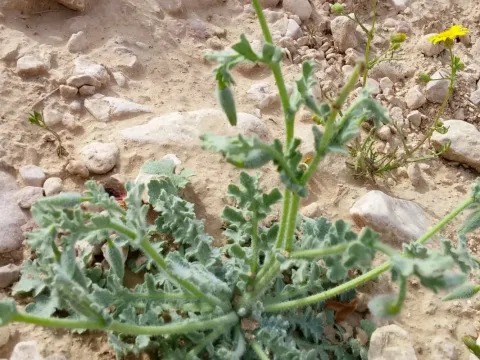
Glaucium arabicum
Glaucium arabicum
Glaucium arabicum is an ephemeroid plant that requires careful timing for sowing, usually linked to moisture availability in the local climate.
What the section contains
Glaucium arabicum
Seeds are typically sown in late autumn to allow for natural stratification, which significantly improves the germination rate in the spring season.
Due to the small size of the seeds, they should be sown shallowly, ideally at a depth of no more than 0.5 to 1 centimeter for optimal growth.
Ensuring a fine soil structure and a weed-free seedbed is essential during the establishment phase to provide seedlings with an early competitive advantage.
Standard row spacing of about 45 centimeters allows for efficient mechanical weeding and ensures that each plant has enough space to develop its root system.
As a member of the Papaveraceae family, Glaucium arabicum is naturally adapted to arid and semi-arid environments with limited water supplies.
The crop thrives in well-drained, sandy or gravelly soils where water stagnation is effectively prevented, which is critical for its health.
Full sun exposure is mandatory for this species to ensure proper development and to maintain the chemical profile required for its utilization.
It prefers moderate temperatures during its growing season but exhibits remarkable resilience to extreme heat and dry conditions typical of its habitat.
Excessive fertilizer application should be avoided, as high nitrogen levels can negatively affect the plant's secondary metabolite accumulation.
The primary threats to Glaucium arabicum in an agricultural setting are fungal diseases, particularly those that thrive in high humidity conditions.
Powdery mildew represents a significant challenge, appearing as white patches on leaves that can reduce the overall yield and quality of the harvest.
Root rots caused by soil-borne fungi occur frequently if the soil drainage is compromised, often leading to rapid decline and plant loss in rows.
Aphids and other sap-sucking insects can cause damage during the active growing phase, necessitating regular scouting of the field to prevent infestations.
Integrated pest management, including crop rotation and the selection of disease-resistant planting sites, is the most effective approach for growers.
Harvesting should be timed to coincide with the peak flowering stage to ensure the highest concentration of active compounds within the plant tissues.
The vegetative biomass is harvested using mechanical cutters, with care taken to maintain the integrity of the plant material during the collection process.
Immediate post-harvest processing is required, as the biological components are sensitive to heat and moisture accumulation during the transportation phase.
Drying is conducted in controlled environments with adequate ventilation, keeping temperatures below 45 degrees Celsius to preserve the essential chemical profile.
Storage of the processed dry matter should be performed in moisture-proof containers placed in dark, cool areas to maintain the product's long-term stability.